TOKYO · AT THE TABLE
Sit down for tonkatsu
A golden cutlet, a bowl of rice and a useful pause in the day. How to choose a tonkatsu meal in Tokyo without turning lunch into another research project.

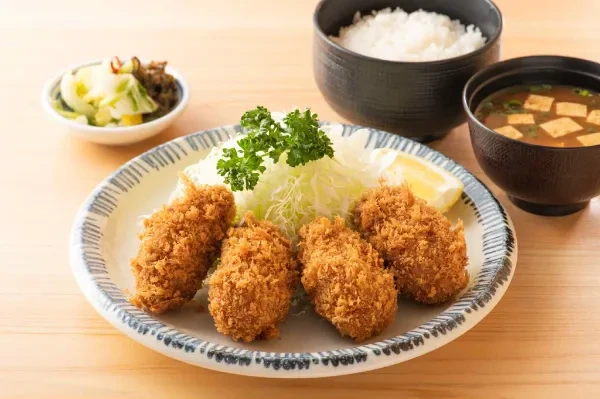
The cabbage is part of the appeal. A generous pale-green mound beside a golden cutlet makes the plate look abundant before the rice arrives. Then there is the little dish of pickles, a bowl of soup, perhaps a wire rack lifting the meat away from the plate. A tonkatsu lunch has more going on than its familiar outline suggests.
Tokyo is a good place to pay attention to those details. At tonkatsu.jp in Omotesando, the menu asks you to think about the producer as well as the cut. In Ginza, Bairin gives the same broad family of ingredients another direction with its egg-topped katsudon. Nearby Omotesando, Maisen offers a dining room with a life that began before it became a restaurant.
The useful question is what you want to sit down to. A slice with a generous edge of fat? A smaller, leaner piece? A complete tray whose parts stay separate, or a rice bowl in which egg and sauce bring everything together? Answer that and much of the menu becomes easier.
THE ORDER
Loin or fillet is a better question than best
Rōsu and hire describe different parts of the pig, rather than two grades of the same meal. Rōsu is loin. Its outer band of fat is a substantial part of the choice, particularly when the restaurant offers a thick cut. Hire is tenderloin, usually served as smaller pieces with much less visible fat. Leaner does not mean a lesser order; it means a different balance on the plate.
For a first visit, decide which of those textures appeals to you, then look at the weight. A 120g loin and a 180g loin can share a name while making quite different lunches. Labels such as jō, often translated as superior or premium, need the restaurant’s own explanation. They do not establish one universal grading system across Tokyo.


ロースかつ
Rōsu · pork loin
Choose this when the fatty edge is something you want to eat. At tonkatsu.jp, loin choices come in several weights; the smaller order lets you try the cut without making lunch a test of appetite.
ヒレかつ
Hire · pork tenderloin
Choose this for leaner, smaller pieces. It is still a breaded and fried pork dish. A mixed loin-and-fillet set, where offered, makes a more useful comparison than assuming one cut must always be better.

The rest of the tray earns its place
Order a teishoku when you want the cutlet to remain the centre of a meal with distinct parts. Rice, soup, cabbage and pickles give you somewhere to go between pieces. The arrangement also lets you decide how much sauce reaches the crust, rather than receiving every mouthful in the same dressing.
There is no need to establish a ceremony. A useful approach is to try a small piece before seasoning the rest, then add the condiment the restaurant recommends. tonkatsu.jp explicitly suggests salt with its cutlets. At Bairin, sauce has its own history: the house describes a fruit-and-vegetable blend developed by its founder, with apple and onion contributing sweetness and thickness.
The cabbage gives the meal a different texture; it is not an obligation to finish a mountain of garnish. Treat refills as a question for the particular shop. tonkatsu.jp’s Japanese daily menu for 2 October 2026 specifies free cabbage refills and one free rice refill; a second rice refill and an extra miso soup are ¥100 each. That is a policy at this restaurant, rather than a promise attached to every tonkatsu set in the city.
A plate, a rice bowl and a takeaway box use similar ingredients but make different meals. Choose the form you want before choosing the most expensive pork.
OMOTESANDO
The producer gets a place on the menu
The interesting thing about tonkatsu.jp is the extra decision it puts between you and your lunch. Its menu names pork producers and origins, then offers different cuts and weights. You can order one straightforward set, but you can also ask which pork is available and compare loin with a smaller fillet portion.
That changes the reason to visit. A menu with many pork labels is most useful when you can make a comparison you understand. Start with the cut you already prefer, ask what is on that day’s list, and choose a portion that suits your appetite. Spending more is an option; it is not the task.


The restaurant gives the rest of the meal a similar amount of attention. Its own account describes a rice blend selected to accompany the cutlet, red miso soup and pickles, with dishes made in Mashiko. The dining room has horse-chestnut wood tables and a live kitchen. In the official photographs, pale wood, daylight and stacks of earthy plates give the food a setting that feels deliberately uncomplicated.
This is an easy lunch to place within an Omotesando day without assembling a food crawl. The restaurant lists its address as the first floor of the FN Building at 3-9-9 Kita-Aoyama, near exit B2 of Omotesando Station. Pick a meal here or at Maisen, then carry on with the neighbourhood; there is little advantage in booking two full cutlet lunches close together.
A NEARBY DINING ROOM
Maisen kept part of a former bathhouse
Maisen’s Aoyama main restaurant offers a different reason to slow down. The company’s history records the opening of its Aoyama building in July 1978, followed in May 1983 by a dining room in the neighbouring former Jingū-yu public bathhouse. That distinction matters: the bathhouse story belongs to the Western-style hall, rather than to every room in the compound.
The high coffered ceiling and the separate entrances that once served the men’s and women’s baths remain part of that hall’s identity. A lunch here can be a small piece of Tokyo architectural history as well as a meal. If that room is your reason for going, ask the restaurant about seating; the address alone does not promise a particular table.
The craft story is in the kitchen too. Maisen describes preparing the pork carefully and using fresh breadcrumbs made from bread baked to its own recipe. Its internal breadcrumb-coating qualification recognises staff trained in coating and frying. There is something appealing about a restaurant turning the apparently simple act of covering meat in crumbs into a skill that is taught and checked.
At Aoyama, the official site accepts weekend and public-holiday reservations only for banquet courses. Check the terms for your meal instead of assuming a regular set lunch can be reserved.
Maisen Aoyama address, hours and reservation termsGINZA
Bairin gives the cutlet another life with an egg
Bairin has been in Ginza since 1927, according to its own history. The house built part of its identity around bite-sized fillet cutlets, a tonkatsu sauce and a distinctive katsudon broth. The story is more useful as an explanation of the menu than as a contest over who invented an entire category of Japanese food.
The current Ginza menu makes the basic plate choice quite tangible. Its ¥3,800 loin set uses 200g of Kagoshima kurobuta loin. The ¥3,600 fillet set is described as four 45g pieces. Both prices include tax. Compare the portion as well as the cut: four separate fillet pieces are a different prospect from a sliced slab of loin.


The bowl is a different decision
Katsudon puts the cutlet over rice. In Bairin’s special katsudon, egg binds the cutlet before another softly cooked egg is added on top. The current menu lists the regular special bowl with 80g of fillet at ¥2,400 including tax. There is also a separate kurobuta special version; do not assume the two names describe the same order.
The sauce and egg change what you are coming for. Some of the breading meets moisture rather than staying exposed on a rack. Rice becomes part of the seasoned mouthful instead of a separate pause. A diner looking mainly for an intact, dry crust may be happier with the set plate; a diner who wants egg and rice together has a reason to choose the bowl.
Bairin describes its katsudon base as a soup made with pork trimmings and onion, distinct from the bonito-based version associated with soba shops. That is the kind of house detail worth knowing before the first spoonful. It explains why the bowl deserves its own place on the menu, rather than being treated as the cheaper version of a cutlet set.
The cutlet that leaves with you
A takeaway box is useful when you want to carry the meal elsewhere, but it does not reproduce every part of the restaurant tray. tonkatsu.jp offers its sets as bento with cutlet, cabbage, rice and pickles; the box does not include miso soup. Order ahead by phone if you want to arrange pickup, and ask about handling the food for your actual journey.
A katsu sando makes a more deliberate change. The pork cutlet goes between bread with sauce, so the point is the combination rather than preserving a restaurant plate in miniature. In a 2022 account, Maisen described its freshly made Aoyama fillet sandwich as using the same recipe as its boxed sandwich, served with the warmth of the newly fried cutlet. The account makes a useful distinction between eating a sandwich freshly prepared at the restaurant and buying a retail box; check the current menu if the former is your reason to go.
Bairin also lists fillet sandwiches for takeaway. If a sandwich is what you want, buy the sandwich; if you want soup, rice and a moment at the table, keep the meal in the dining room. Neither choice needs to become the consolation prize for missing the other.

KEEP THE DETAILS
Three addresses for three different lunches
These are independent options around two parts of Tokyo, not a route to eat all three in one day. Service details were checked on 2 October 2026; confirm them again close to your visit.
tonkatsu.jp 表参道
tonkatsu.jp Omotesando
For a menu that separates pork origin, cut and portion.
- Address
- FN Building 1F, 3-9-9 Kita-Aoyama, Minato-ku, Tokyo. Omotesando exit B2.
- Service
- Weekdays 11:30–15:30 (last order 15:00), 17:30–21:00 (last order 20:00). Weekends and holidays 11:00–15:00 (last order 14:30), 17:00–21:00 (last order 20:00).
- Telephone
- 03-6427-4910
Usually closed Monday and Tuesday; public-holiday opening and substitute closures apply. Check the monthly calendar. Dinner reservations are offered.
Official restaurant informationとんかつ まい泉 青山本店
Maisen Aoyama main restaurant
For the former-bathhouse hall and a longer pause near Omotesando.
- Address
- 4-8-5 Jingumae, Shibuya-ku, Tokyo. Omotesando exit A2.
- Service
- 11:00–22:00; last order 21:00.
- Telephone
- 050-3188-5802
Closed 1 and 2 January. On weekends and public holidays, reservations are accepted only for banquet courses. Ask about the dining room if its architecture is your reason to visit.
Official restaurant information銀座梅林本店
Ginza Bairin main restaurant
For a classic cutlet plate or the special egg-topped katsudon.
- Address
- Ginza Bairin Building B1, 7-8-1 Ginza, Chuo-ku, Tokyo. Ginza exit A2.
- Service
- Opens 11:30; last order 20:00; closes 21:00. No afternoon break.
- Telephone
- 03-3571-0350
No seat reservations. Guests are guided in order by staff. New Year closures are announced; check the current notices.
Official restaurant informationA few things worth settling before lunch
What is the difference between rōsu and hire?
Rōsu is pork loin with an outer band of fat; hire is tenderloin, generally leaner and served as smaller pieces. Choose by the texture and portion you want rather than treating one as a universal upgrade.
How much does a tonkatsu meal cost in these restaurants?
On tonkatsu.jp’s 2 October 2026 menu, the available 岩中豚 120g loin set is ¥1,890 and the 130g fillet set ¥2,590, including tax. Bairin’s current Ginza menu lists its 200g kurobuta loin set at ¥3,800 and special katsudon at ¥2,400, including tax. These examples are not a Tokyo-wide price range; producer, cut, weight and dish change the bill.
Can I book a tonkatsu lunch?
Do not assume one policy applies to all three. tonkatsu.jp explicitly offers dinner reservations. Maisen Aoyama accepts weekend and public-holiday reservations only for banquet courses. Ginza Bairin does not accept seat reservations. Use each restaurant’s own current information for the meal you intend to eat.
Does every set come with free refills?
There is no citywide rule. tonkatsu.jp’s Japanese menu for 2 October 2026 specifies free cabbage refills, one free rice refill, and ¥100 each for a second rice refill or extra miso soup. Bairin lists rice refills. Ask about the restaurant and item you are ordering rather than extending one shop’s policy to the city.
Is tonkatsu the same dish as katsudon or gyūkatsu?
Tonkatsu is a breaded pork cutlet. Katsudon is a rice bowl with a cutlet; Bairin’s special version uses egg, although katsudon preparations vary. Gyūkatsu is a beef cutlet. A golden crust alone does not identify the meat or the form of the meal.
If the menu still feels crowded with possibilities, a loin or fillet set is enough of a decision. Leave some room in the afternoon, order a portion you actually want, and give the tray your attention. Lunch can be one of the reasons to be in Tokyo, without becoming a project that takes over the day.
Reporting and photograph notes
This is a source-based editorial guide, not a claimed restaurant visit or tasting. Restaurant history and preparation details are attributed to the businesses’ own accounts. Prices and service policies were checked on 2 October 2026. The daily pork menu is a dated example; availability can change. Current Ginza Bairin prices come from ginzabairin.jp, rather than its older menu page dated April 2024. Refill terms follow the Japanese daily menu; its distinction between cabbage and rice is clearer than the English version.
All ten photographs are real images published by the named restaurants. They illustrate the specific dishes, preparation and rooms described; they are not evidence of our visit. Their capture dates are not supplied. Sources and owners are linked beside each image. No AI-generated images are used in this story.
- tonkatsu.jp dishes, accompaniments and dining room
- tonkatsu.jp English menu for 2 October 2026
- tonkatsu.jp address, hours and dinner bookings
- tonkatsu.jp October 2026 opening calendar
- Ginza Bairin current menu and visitor information
- Ginza Bairin house history
- Maisen Aoyama address, hours and reservation terms
- Maisen history and the former bathhouse
- Maisen ingredients and breadcrumb-coating training
- Maisen account of the hall and freshly made sandwiches
- tonkatsu.jp Japanese daily menu and refill terms for 2 October 2026