TOKYO · ART & CULTURE
teamLab Planets or Borderless?
Choose the experience, not the photograph.
One asks you to take off your shoes. The other invites you to lose your bearings. A considered guide to Tokyo’s two teamLab museums—and the differences that matter once you are inside.

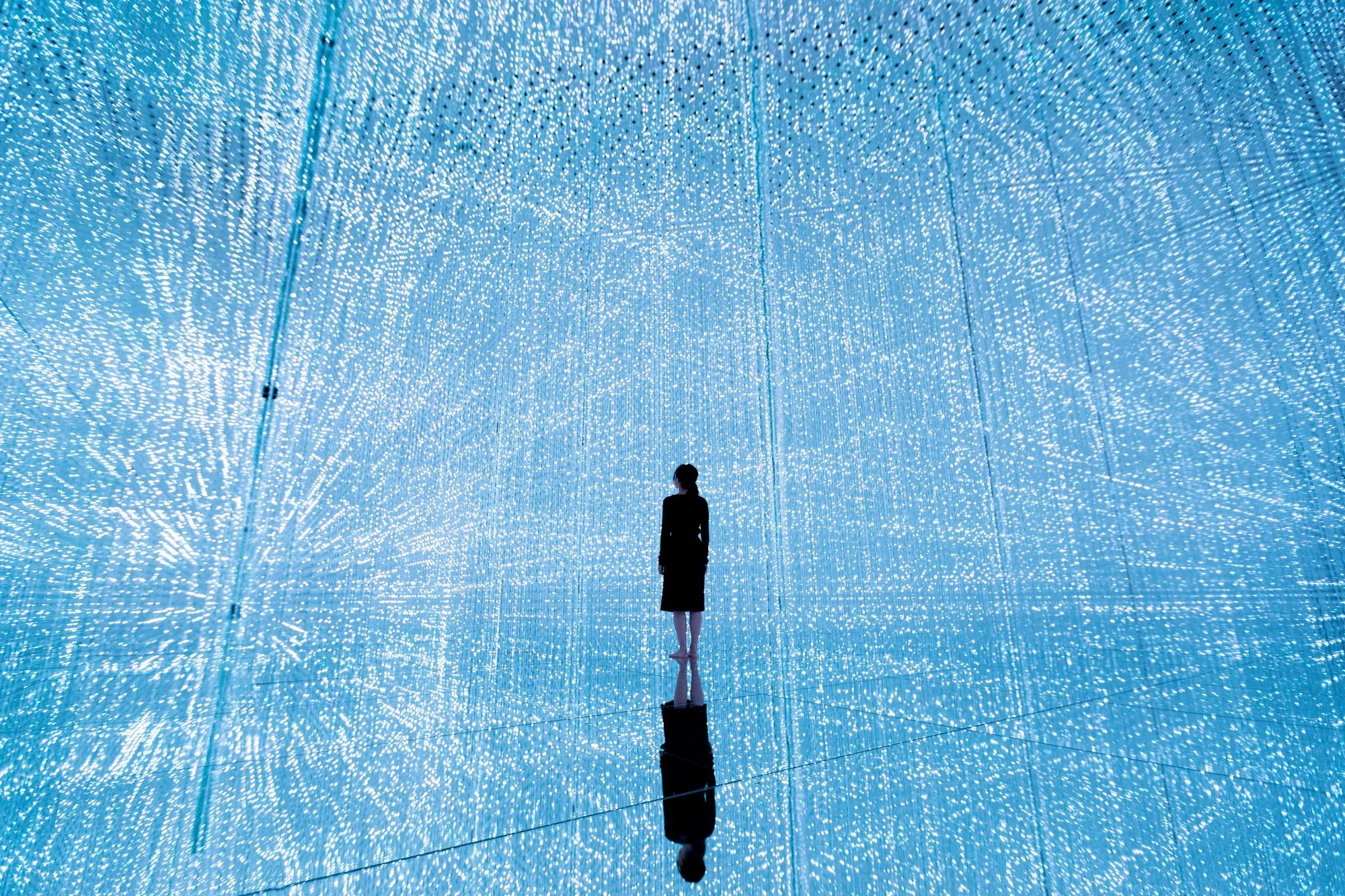
A room full of flowers is an unreliable address. Search for teamLab in Tokyo and the images begin to merge: illuminated petals, a person standing inside an apparently endless constellation, light spilling over the floor. Save a few without their captions and it becomes surprisingly easy to fall in love with one museum and book the other.
Planets is in Toyosu. Borderless is in Azabudai Hills. They are separate museums with separate tickets, and neither is a smaller version of the other. The useful question is what you want to do with an afternoon: feel your way through art with your body, or follow your curiosity through an environment that resists a tidy route?
There is another reason to pause before accepting the usual comparison. Planets expanded substantially in January 2025. Advice that reduces it to a handful of rooms and a quick, predictable circuit is describing an older visit. Here is how to choose between the museums as they stand now.
TOYOSU / teamLab Planets
The body gets a vote

The barefoot part is easy to treat as a novelty until you think about what it changes. In a conventional gallery, your feet mostly carry you between things to look at. At Planets, the floor can become part of the encounter. Water has a temperature and a depth. A surface can make you aware of your balance. Looking is only one way of paying attention.
The museum’s Water area is where you remove shoes and socks. Some works involve water that can reach an adult’s knees; that does not mean the whole museum is submerged. In The Infinite Crystal Universe, points of light and reflections create a space whose edges are difficult to read. In Floating Flower Garden, the orchids are living plants, not projected flowers. The contrast between these environments is more interesting than calling all of them digital art.
Choose Planets if that physical variety is the reason you want to go. Being asked to roll up your trousers is a small inconvenience if water is the experience you came for. It is a poor bargain if you only wanted a handsome indoor backdrop before dinner.

WHAT OLDER COMPARISONS MISS
Planets is no longer a quick detour
On 22 January 2025, an expansion increased the museum’s area to 1.5 times its previous size and added more than twenty artworks. Athletics Forest, Catching and Collecting Forest and Future Park widened the experience beyond the familiar photographs of water and orchids.
That changes how to plan. There are works built around moving, balancing and making things, as well as spaces in which to pause and look. A visitor who wants the flower garden and crystal space may have a very different afternoon from someone absorbed in the interactive installations. Treat a short visit you read about before the expansion as a personal anecdote, not a reliable timetable.
The added activities can make Planets appealing to children who like to move. They do not turn every installation into a playground suitable for every age or ability. Read the instructions at each work and allow for the possibility that somebody in your group will prefer to watch, take a detour or move on.
AZABUDAI HILLS / teamLab Borderless
Leave the checklist at the door
Borderless makes a different demand: accept that you may not know exactly where you are going. The museum does not provide a map. Artworks move beyond the rooms in which you first encounter them, and the relationship between spaces matters as much as any individual scene. It is an awkward place to approach as a list of photographs to reproduce in order.
This is the stronger choice if you enjoy doubling back, noticing a passage you missed and staying with a scene as it changes. You do not need to understand the technology to notice that a room can feel different when you return to it. The absence of a prescribed sightseeing route is part of the attraction; for a visitor who finds uncertain layouts tiring, it may also be part of the difficulty.
Bubble Universe offers the kind of luminous, enveloping image that sends people searching for teamLab in the first place. EN TEA HOUSE works at a different scale: flowers appear within a bowl of tea. The tea experience requires an additional order. It is an optional pause, not something you need to add to make the museum visit complete.
Be careful with the address. Tokyo’s current Borderless is in Azabudai Hills, where it opened in February 2024. An old Odaiba itinerary or a photograph tagged with the former location can send you across the city to the wrong place. Check the venue name on the ticket before building the rest of your day around it.
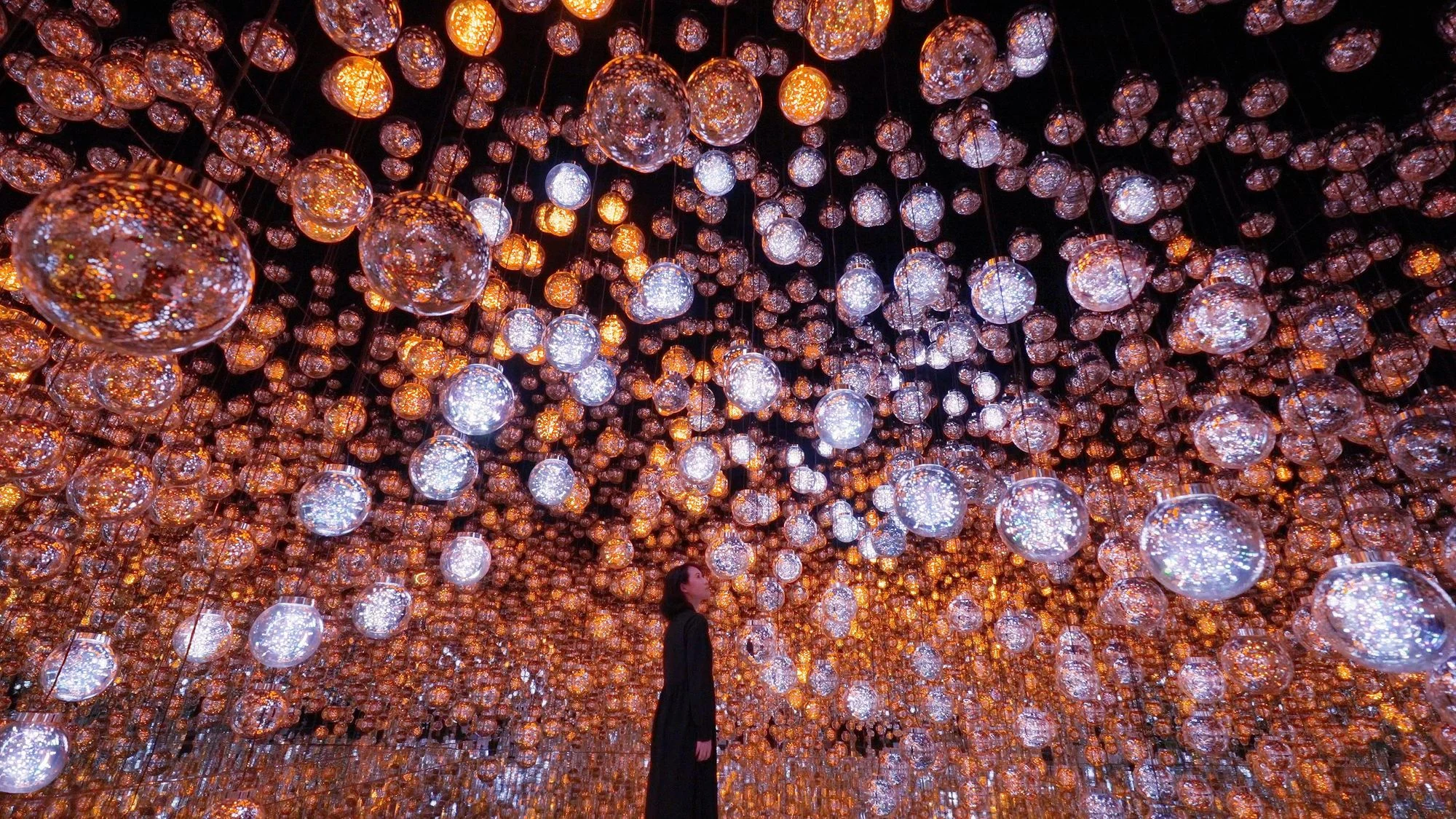

Two museums, side by side
The differences below are more useful than a score out of ten. Prices are starting figures checked on 29 September 2026; use the booking calendar for your date.
| At a glance | Planets · Toyosu | Borderless · Azabudai Hills |
|---|---|---|
| The central experience | Water, changing surfaces, living flowers and physical participation. | An interconnected world of artworks to explore without a museum map. |
| What to wear | Clothes that can clear your knees; remove shoes and socks for Water. Bring secure footwear for active works. | Comfortable walking shoes. Some mirrored floors make trousers a practical choice here, too. |
| Adult admission | From ¥4,200 in the official ticket store; check the selected date. | ¥3,600 displayed on the official page; adult tickets use dynamic pricing. |
| Nearest station | Shin-Toyosu: approximately 1 minute from the north exit. Toyosu: approximately 10 minutes from Exit 7. | Kamiyacho: approximately 2 minutes from Exit 5, via the connected underground passage. |
| With children | Active installations, drawing and discovery; water and changes of clothes need planning. | Wandering and Sketch Ocean can appeal to children too; darkness and an unfamiliar layout need consideration. |
| A sensible time budget | Keep a half-day window free if you want to explore the expanded museum without rushing. | Keep a half-day window free for unhurried exploring and pauses. Neither estimate is an official visit duration. |
Neither ticket includes the other museum. Neither venue permits re-entry after you leave. Opening hours, closures and artwork availability should be checked for your own date.
Planets official ticket store: current starting prices ↗teamLab Borderless: artworks, access, admission and FAQs ↗The small practical things can decide it
A beautiful room is only enjoyable if you can comfortably spend time in it. Before comparing colours and photographs, think about the person in your group who has the most specific needs.
Clothes you can actually move in
For Planets, choose trousers that roll above the knees without becoming tight. Water and tights are an inconvenient combination: socks and stockings come off in the locker area. The venue offers free rental shorts, but arriving in clothes you are comfortable adjusting makes the transition easier. Some active works cannot be experienced in high heels or sandals without heel support; rental shoes are available.
Mirrored floors are not exclusive to Planets. Borderless also advises visitors wearing skirts about reflections and provides wrap skirts near the relevant work. A long dress chosen for a photograph is not automatically the most comfortable choice for the visit.
Children, darkness and spare clothes
At Planets, pack a change of clothes for a small child who may get wet. The museum asks visitors to change before continuing to the next work if their clothes are wet. Strollers must be left in the designated storage area; Borderless also requires stroller storage. Think through carrying and walking rather than assuming the buggy can come along.
Both museums involve dark spaces and strong visual stimulation. Borderless has creative activities such as Sketch Ocean, so the neat split of Planets for children and Borderless for adults does not hold up. Temperament is more useful than age as a starting point: does your child like unfamiliar spaces, need frequent breaks, or become unsettled when a room changes around them?
Accessibility needs a specific conversation
Neither a photograph of stairs nor the word accessible tells the whole story. Planets describes wheelchair arrangements, tyre covers for visitors using their own chair, detour routes and works that may be viewed from designated areas. Borderless permits wheelchair and stretcher entry via an elevator, but some artworks cannot be entered or experienced by wheelchair users.
Contact the venue about the person’s actual equipment, transfer needs and the works they most want to see before buying. If mobility assistance is needed, both venues ask visitors to come with a companion. This is a better basis for choosing than assuming Borderless is completely flat or Planets is simply impossible.
Book the date. Keep the afternoon flexible.
Start with the official page for the museum you have chosen and follow its ticket link. Standard admission is booked for a date and entry time. That time is your arrival commitment, not a promise that you will enter without a queue or finish within a particular interval. A popular date can sell out; availability matters more than a universal rule about booking a fixed number of weeks ahead.
The adult figures in our comparison are not a quote for every date. Planets’ official store lists admission from ¥4,200, while Borderless explicitly uses dynamic pricing for adults. Select your day before comparing the final totals. Read the terms of the seller you actually use: directly purchased tickets have date-change provisions, but that is not the same as a freely refundable booking.
For an unhurried visit, reserve a half-day window in your itinerary, including arrival, lockers, possible queues and a break afterwards. This is our planning allowance, not the museums’ official duration. Some visitors will use less time; somebody drawn into the expanded Planets activities or the changing spaces at Borderless may want more. Avoid a tightly timed restaurant reservation immediately after either visit.
Let the neighbourhood make the final decision
If both experiences appeal equally, geography is a useful tie-breaker. Planets places you in Toyosu, with Shin-Toyosu station close by and the waterfront around you. Build the surrounding day around that side of Tokyo instead of treating the museum as an isolated pin. If you are also considering Toyosu Market, check its visitor arrangements and opening days separately; a museum reservation does not make every nearby activity fit the same schedule.
Borderless fits an Azabudai Hills afternoon more naturally. From Kamiyacho station, follow the underground connection to Garden Plaza B, basement level B1. The operator gives an approximate two-minute walk from Exit 5; that is the station-exit walk, not your entire journey from a hotel across Tokyo. Leave room to emerge, eat and talk about what you saw before the next attraction.
Doing both museums is possible with separate bookings, but putting them on the same day is not our default recommendation. You would be exchanging a substantial stretch of Tokyo for two long encounters with intense indoor environments. If teamLab is a particular interest, give each visit space. If it is one curiosity among many, choose one and let the rest of the day be something different.
There is no need to declare a winner. If you keep returning to the thought of water around your legs and orchids above your head, book Planets. If what appeals is the freedom to turn a corner without knowing what comes next, book Borderless. Then stop comparing for a while. The afternoon belongs to the place you chose.