
Okinawa & Ryukyu Gastronomy — Agu Pork Traditions, Goya Champuru, and Awamori Craft
The refined hospitality of Shuri royal court cuisine, the translucent tenderness of Agu pork rafute simmered in awamori and cane sugar, and the island wisdom of nuchigusui nurtured across coral seas and sun-drenched gardens
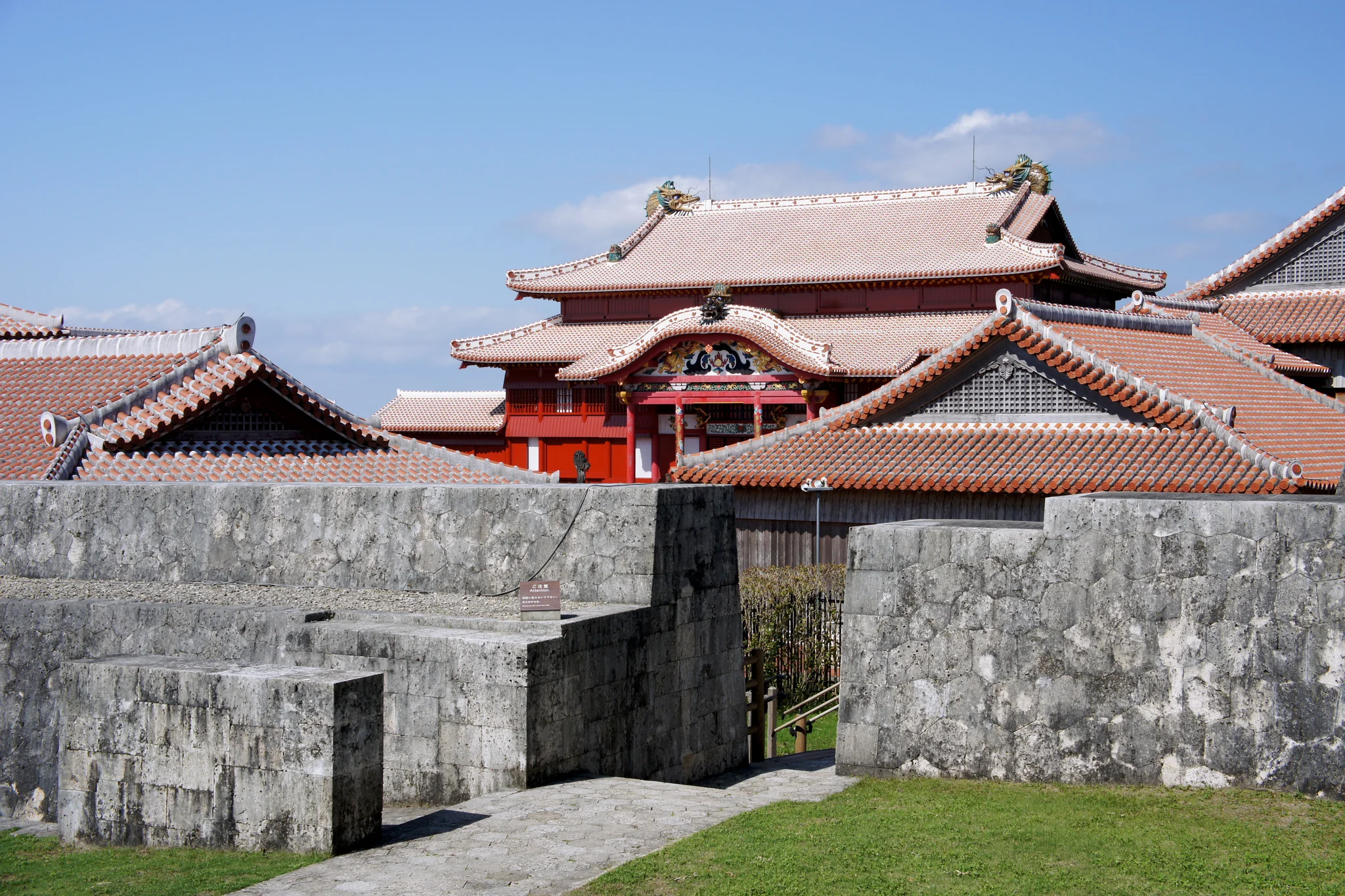
A cultural exploration of Ryukyu culinary traditions, interpreting regional food not merely as vacation novelties, but as the living practice of Nuchigusui — food as medicine for life. Moving between royal courts, family kitchens, maritime trade routes, and island harvests, this essay reflects on the profound truth that mindful eating sustains the soul.
Crimson Walls of Shuri, Coral White Sands, and the Rising Aromas of Vintage Awamori
Standing upon the heights of Shuri, one realizes that the Ryukyu dining table was always open toward the open ocean. The deep red lacquer of Shuri Castle symbolized royal sovereignty while simultaneously serving as an elegant stage to welcome guests arriving from across the seas. Bound by tribute diplomacy with Ming and Qing China, tense exchanges with the Satsuma clan, and maritime trade routes extending into Southeast Asia and the Japanese archipelago, the Ryukyu Kingdom absorbed utensils, distilling techniques, and crops alongside foreign wisdom. Yet islanders never served imported goods unchanged. Factoring in typhoon-swept fields, limestone topography, firewood scarcity, and freshwater constraints, they thoughtfully refashioned these elements into a cuisine that could only belong to this subtropical soil. To gaze upon Shuri Castle, rebuilt repeatedly through historical fires, is to honor what was lost while admiring the quiet craft of cultural renewal.
The true character of Okinawa cannot be captured by resort advertisements alone. Ferocious typhoons flatten crops, blistering droughts deplete cisterns, and the devastating battle of the Pacific War shattered domestic foundations. Island soils vary dramatically, from porous limestone farmland to dense clay beds. Reading these harsh conditions with care, generations of islanders cultivated sweet potatoes, curdled firm soybeans, gathered coastal seaweeds, and raised pigs, transforming every available scrap into sustaining life. While an enormous gulf separated grand royal banquets from humble agrarian meals, communal feasts that accompanied ancestral rituals, weddings, and New Year slaughtering carried a sacred weight, forging collective resilience through shared food.
Nuchigusui — commonly translated as 'food is life medicine' — is far more than a checklist of nutritional benefits. It describes the complete comforting experience of hot broth restoring an exhausted body, a gentle face smiling through rising steam, and a single spoonful of pure flavor dissolving daily worries. To reduce Okinawan dining to a clinical prescription for longevity erases both historical shifts in diet and the tireless physical labor of the people. In truth, the island dining table has always been a heartfelt prayer to wake up, work, and embrace community tomorrow. When awamori aromas linger in the evening breeze and island tofu drinks in golden dashi broth, travelers taste far more than southern delicacies — they encounter an enduring meditation on cherishing life.
Translucent Pork Belly and the Fragrance of Awamori — Reading Ryukyu Pork Culture Through Rafute
Exemplary Rafute never flaunts excessive greasiness. It achieves a seamless, effortless melting transition across three distinct textures — skin, luscious fat, and tender lean meat. Parboiling large slabs in water skims away excess oils and impurities, allowing the subsequent slow simmer in awamori, cane sugar, and soy sauce to concentrate pure pork flavor rather than smother it in heavy seasoning. Understanding this dish, celebrated for its royal court lineage, requires looking beyond imperial banquets toward village households that nurtured, butchered, and cooked every part of the pig. While heritage Agu pork holds an essential place in this heritage, authentic rafute does not strictly require purebred Agu. Distinguishing between culinary technique and livestock lineage allows the unique merits of both to shine clearly.

Honoring Everything but the Squeal — From Ears to Trotters, the Thrifty Devotion of Ryukyu
The introduction of domestic pigs to the Ryukyu Kingdom is traditionally traced to fourteenth-century diplomatic trade with China, though the gradual evolution of local swine herds cannot be reduced to a single date. What remains undeniable is how profoundly pork became woven into everyday island life. Historic homesteads featured pigpens integrated directly with latrines, creating closed resource loops under conditions vastly different from modern hygiene norms. Yet fresh pork was never an everyday indulgence. Slaughtering a pig for New Year, ancestral rites, or village weddings carried solemn communal significance. The famous saying that islanders eat every part of the pig except its squeal is not boastful hyperbole — it reflects tireless culinary discipline in the kitchen. In Nakami-jiru soup, pig stomachs and intestines are scrubbed repeatedly with salt and flour, repeatedly parboiled until clear, yielding an astonishingly clean, tender texture in clear dashi broth. Mimigar celebrates the crunchy cartilage of pig ears tossed in citrus vinegar or peanut dressing. Tebichi trotters require hours of gentle simmering to soften thick skin and tendons, concentrating rich collagen around the bone. None of these dishes arise from mere frugality — they demand extensive washing, parboiling, trimming, and slow simmering. This ungrudging labor is the true embodiment of reverence for animal life.
Safeguarding the Heritage Agu Pig — Bloodlines Overcoming Extinction and the Melting Palate
With coarse black bristles, a compact stature, and a sagging belly, the heritage Agu pig moves to a rhythm unconcerned with modern industrial speed. Devastated by wartime combat and displaced postwar by fast-growing Western crossbreeds, purebred native Agu dwindled to near extinction. Their salvation was built by dedicated farmers and researchers in places like Nakijin who scoured rural islands to verify bloodlines and painstakingly rebuild breeding stock. When visiting contemporary farms, diners should respect not merely the aura of rarity, but the deliberate decision to maintain slow-growing livestock for future generations. The sensory appeal of Agu pork centers on its sweet, low-melting fat and concentrated umami that unfolds with each chew. However, one should avoid asserting rigid claims that Agu fat uniformly melts at precisely 38 degrees Celsius, or that its glutamic acid levels are universally identical across all animals. Fatty acid composition varies depending on bloodline, feed, age, cut, and farm management. Furthermore, retail pork labeled as Agu often includes first-generation commercial crossbreeds, which differ from purebred conservation herds. By verifying provenance and savoring whether the fat finishes cleanly without cloying heaviness, diners engage with genuine livestock heritage rather than marketing slogans.
Awamori and Cane Sugar in Slow Transformation — Amber Luster and Chopstick-Tender Pork Skin
The creation of authentic Rafute begins with meticulous skin preparation. Large slabs of skin-on pork belly are gently scraped, parboiled whole, and rinsed to eliminate impurities and excess grease. Cut into generous square blocks, the pork is transferred to a pot with awamori, sugar, and soy sauce, simmering over steady low heat without violent boiling. Adding dashi broth or water during simmering is standard practice across many kitchens — simmering exclusively in undiluted awamori and black sugar is not an unbending royal decree. Okinawan black sugar imparts deep color and mineral aroma, though white or raw cane sugar is also employed depending on family custom. The magic here is governed by temperature and patient time rather than mysterious alchemy. Sustained gentle heat converts tough collagen in the skin and connective tissue into melting gelatin. Awamori adds subtle floral aromatics while softening muscle fibers, as sugar and soy sauce establish a harmonious sweet-savory balance. Simmering duration varies with meat thickness and pot heat, meaning eight hours is a guideline rather than an absolute rule of excellence. Allowing the pot to cool overnight permits flavors to permeate deep within while congealed surface fat can be skimmed away cleanly before reheating. Properly cooked rafute yields effortlessly to chopsticks yet holds its elegant shape on the plate, offering bouncy skin, luscious fat, and deeply savory lean pork.
The Elegance of the Tundabun Lacquerware Tray — Shuri Royal Court Gastronomy Welcoming Envoys
Welcoming Chinese imperial Sapposhi envoys who traveled to invest each new Ryukyu monarch was the kingdom's paramount diplomatic event. Elaborate banquets were designed not merely to nourish, but to showcase kingdom statecraft, refined manners, and aesthetic cultivation through multi-course menus, tableware, music, and court dance. Integrating Chinese banquet conventions with indigenous island seafood and livestock, Shuri palace chefs elevated local gastronomy into an art form. The lidded red lacquer Tundabun tray symbolizes this courtly hospitality. Inside, an array of small dishes displays intricately carved squid flowers, rolled konbu kelp, steamed fish cakes, and cured pork, composing a visual garden upon the table. While modern recreations offer glimpses of these dishes, historical records show menus varied widely across eras and ceremonies, and rafute was not necessarily included in every single course. Following the abolition of the Ryukyu Kingdom and the turbulence of modern warfare, royal culinary secrets dispersed into private homes and downtown restaurants. Savoring rafute today means honoring centuries of culinary preservation that bridge courtly dignity and everyday island warmth.
Transforming Bitterness into Vitality — Island Tofu, Goya Champuru, and Longevity Wisdom
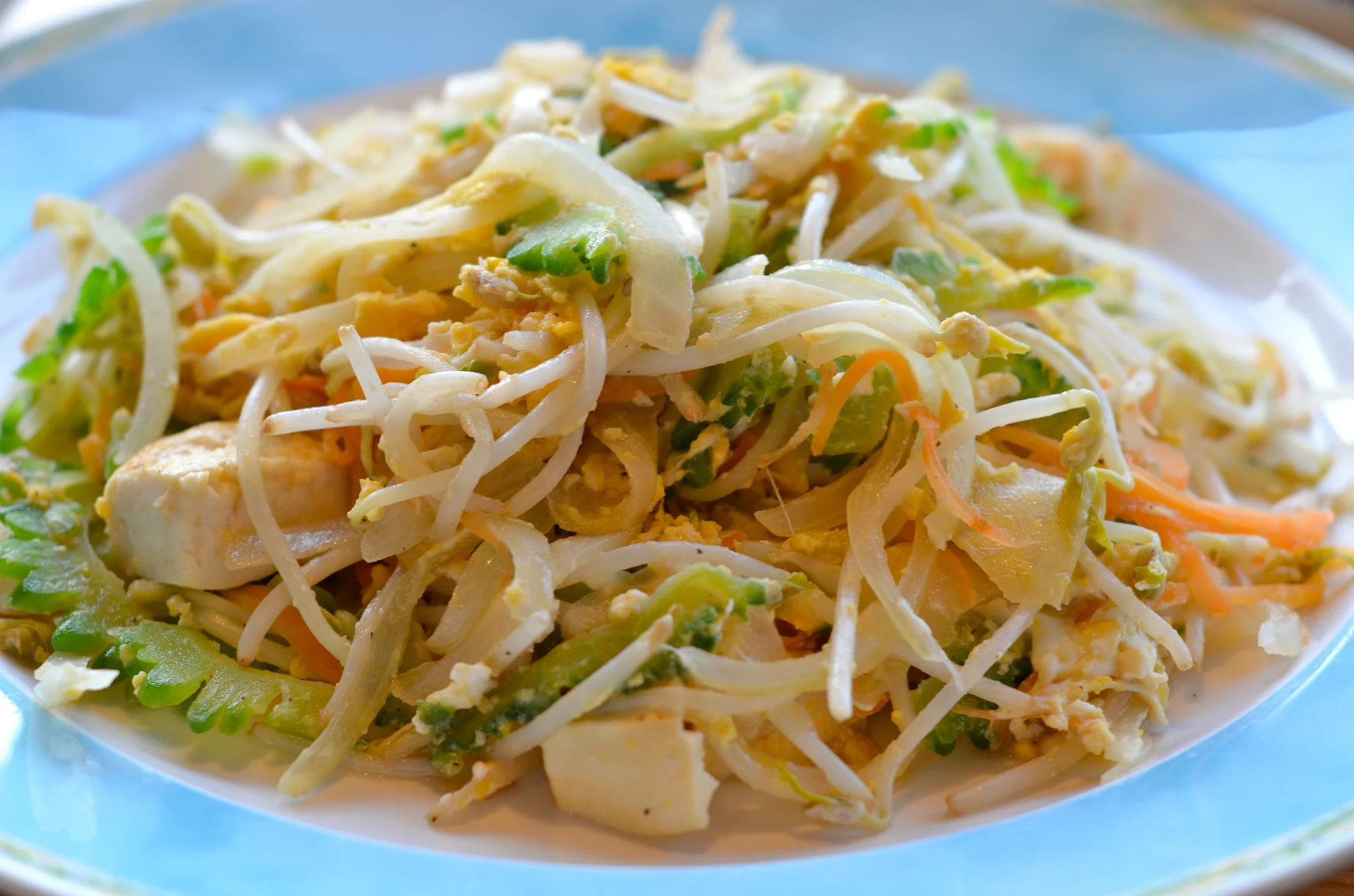
The bitterness of goya is the sharp shadow that Okinawan summer casts across the dining table. Biting into a crisp slice releases intense vegetal brightness, quickly softened by rich pork fat, the earthy soy aroma of firm island tofu, and the gentle comfort of scrambled egg. Goya Champuru is not designed to eradicate bitterness. It creates a welcoming culinary space where bitterness coexists harmoniously alongside rich umami. Similarly, the concept of Nuchigusui — medicine for the soul — does not refer to isolated vitamins. A steaming bowl that satisfies evening hunger, the caring hands that prepared it, and warm laughter shared across the table all nourish human health. Exploring Okinawan longevity requires looking beyond miracle ingredients toward the enduring habit of sharing fresh garden produce, legumes, and seaweeds with neighbors.
Hand-Torn Island Tofu and Vivid Green Goya — The Balanced Rhythm of Sizzling Cast Iron
Shima-tofu stands apart from mainland tofu due to its dense, unyielding structure that resists crumbling during high-heat stir-frying, alongside its pronounced soybean richness. Chefs slice off a small taste to judge its natural salinity, patting the surface dry. Tearing the tofu into large chunks by hand creates rough, craggy facets that catch seasonings and hot oil far better than smooth knife cuts. In a blazing cast-iron skillet, a touch of lard is rendered and the tofu is browned without frantic stirring, developing a savory crust before being set aside. Thinly sliced pork is sizzled, followed by bitter melon that has been halved and scraped clean of seeds and white pith. Lightly salting or blanching the slices softens their astringency without dulling their crisp snap. Tofu returns to the pan with sea salt and a splash of soy or bonito broth, finished with beaten egg that gently sets around the vegetables. Cooking swiftly over assertive heat keeps ingredients crisp without steaming in pooled moisture.
Champuru means 'to mix together' in Okinawan dialect, describing home stir-fries uniting tofu with seasonal vegetables. Crucially, tofu never attempts to become meat, and goya never dissolves into soft egg. Distinct ingredients retain their clear identities while forming a unified harmonious dish. This culinary balance mirrors the broader history of Okinawa, which absorbed foreign goods and ideas through maritime commerce and thoughtfully wove them into local customs. Yet this synthesis was also forged through adversity, food scarcity, and wartime recovery, where families ingeniously stretched whatever ingredients were at hand. The true generosity of champuru lies in discerning differences and bringing them into peaceful coexistence upon a single plate.
The Living Philosophy of Nuchigusui — Coastal Seaweeds and Wild Herbs Under Island Sunshine
Mozuku seaweed, fuchiba mugwort, chomeiso cliff herb, and turmeric are celebrated as longevity treasures, yet their true value lies in practical everyday home cooking. Cultivated in sunlit coral lagoons, slimy mozuku seaweed provides dietary fiber and polysaccharides that refresh the palate when dressed in light vinegar or dropped into hot soup. Fuchiba mugwort lends an herbal, slightly bitter aroma that cuts the richness of goat stew or savory seasoned rice. Chomeiso, growing wild on wind-battered sea cliffs, is chopped into fresh salads or deep-fried as tempura. Turmeric varieties are brewed into gentle teas rather than consumed as concentrated megadose supplements. Nuchigusui is fundamentally about enjoying fresh, unpretentious local ingredients in balanced harmony rather than chasing miracle cure-alls.
Tofuyo represents the quiet fermentation craft of transforming ordinary bean curd into an extraordinary culinary delicacy. Firm island tofu is pressed dry and aged for months in a fermenting mash of red koji mold, yellow koji, and strong awamori. Microbial enzymes break down soybean proteins into rich amino acids, yielding a dense, velvety texture that melts across the tongue like aged cheese. Served in royal banquets to impress foreign emissaries, tofuyo is traditionally enjoyed using a single bamboo toothpick, lifting tiny morsels to accompany sips of aged awamori. In that concentrated bite rests the patient craft of farmers, tofu makers, and distillers working in unison.
Banyan Wood-Ash Lye and Ceramic Jars — Hand-Pulled Soba and Vintage Aged Awamori
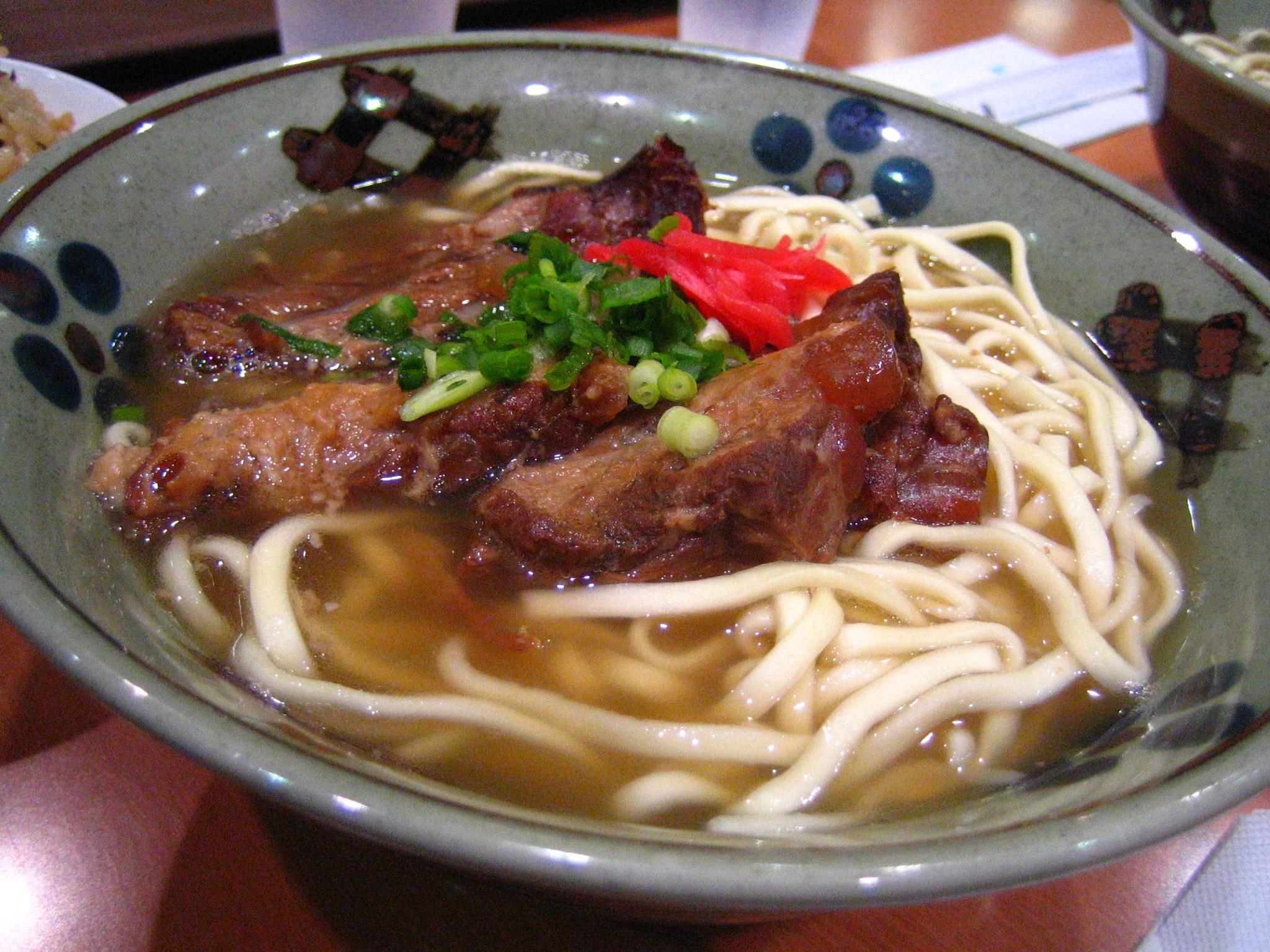
Breathing in the fragrant steam of Okinawa Soba reveals a clean surge of smoky bonito floating above the rich depths of simmered pork bones. What gives these firm wheat noodles their distinctive springiness is the historical use of wood-ash lye water, while the aged awamori enjoyed after dinner matures slowly through black koji fermentation and ceramic storage jars. Simultaneously, popping sea grapes celebrate momentary oceanic freshness, while marbled Ishigaki beef showcases years of dedicated pasture husbandry. Knowing which foods to savor immediately and which to allow time to unfold is the key to appreciating Ryukyu gastronomy.
Pure Wheat Noodles Without Buckwheat — Wood-Ash Resilience in Clear Bonito Pork Broth
Despite being called 'soba', Okinawa soba contains zero buckwheat flour. It is crafted entirely from wheat flour, water, salt, and an alkaline solution that creates its signature chew and pale yellow hue. Traditional artisans historically gathered ashes from burned banyan and hardwood trees, steeping them in water to extract natural alkaline lye called mokuhai-jiru. While modern noodle makers predominantly employ standard kansui, several dedicated heritage shops preserve the wood-ash method. Following Okinawa's reversion to Japan, national authorities questioned labeling 100% wheat noodles as soba, prompting local champions to fight for their culinary identity until fair trade authorities officially recognized 'Honba Okinawa Soba' on October 17, 1978 — celebrated annually as Okinawa Soba Day.
Broth formulations vary between shops, with some accentuating hearty pork bone richness and others emphasizing clear, dancing katsuobushi bonito flakes. Soki refers to pork spare ribs slow-cooked until meltingly tender, with diners choosing between cartilage ribs (nankotsu soki) that can be eaten entirely and traditional bone-in ribs (hon soki). Slices of three-layer sanmainiku pork belly add sweet, glazed richness to the bowl. Diners should first taste the unadorned broth and firm noodles before adding a few drops of koregusu — fiery island chilies steeped in awamori — which transforms the aroma with clean heat. Because koregusu contains alcohol, drivers and children should enjoy their noodles plain.
Six Centuries of Distillation and Black Koji — Thai Indica Rice and Vintage Kusu Jars
The roots of Awamori trace back to fifteenth-century maritime trade between the Ryukyu Kingdom and Siam. Today, distillers still rely primarily on imported Thai indica long-grain rice, which ferments cleanly and withstands subtropical humidity. Uniquely, the entire grain mash is inoculated with black koji mold (kuro-koji), creating an all-koji fermentation that produces natural citric acid to suppress unwanted bacterial spoilage. The fermented mash is distilled once in traditional copper or stainless pot stills, capturing bold floral esters and earthy grain character that age gracefully over decades.
Awamori matured for three years or longer earns the esteemed title of Kusu (vintage aged spirit). Rather than letting barrels sit idle, Ryukyu families and distilleries developed the ingenious Shitsugi replenishment method. When vintage awamori is decanted from the oldest ceramic jar for a special celebration, the emptied volume is refilled from the second-oldest jar, which is in turn topped up from the third, concluding with young spirit added to the final vessel. This continuous cycle replenishes lost volatile esters without shocking the aged core. Savoring vintage awamori is an exercise in appreciating layered aromas of roasted cacao, vanilla, and dried fruit that linger long after the glass is empty.
Green Caviar from Coral Seas and Yaeyama Wagyu — Umibudo and Flame-Seared Ishigaki Beef
Umibudo is the edible green bead of the marine algae Caulerpa lentillifera. Biting into a freshly harvested cluster releases a refreshing burst of ocean salinity with a delicate vegetal finish. Dubbed green caviar for its glistening appearance, umibudo is sensitive to extreme cold and will collapse if placed in a home refrigerator. Fresh sea grapes should be stored at room temperature, rinsed briefly in water right before dining, and dipped gently into citrus sanpin ponzu rather than drenched in dressing to preserve their crisp pop.
Ishigaki Wagyu represents premium black-haired cattle raised on the tropical pastures of the Yaeyama archipelago. While grazing on open green pastures shapes their early vitality, cattle are finished with balanced grain feed in modern barns to develop exquisite intramuscular marbling. Searing thin cuts over charcoal caramelizes surface sugars while preserving tender, juicy meat inside. Seasoned simply with island sea salt, Ishigaki beef delivers sweet aromatic marbling that melts effortlessly across the palate.
Six Iconic Ryukyu Sanctums — From Heritage Tile-Roofed Estates to Public Market Energy
To truly comprehend Ryukyu gastronomy, one must listen to the setting where each dish is served. Coastal breezes rustling through Shuri stone gardens, cheerful noodle orders echoing in a Yanbaru wooden diner, vendors bantering over tropical fish at public stalls, and fermentation aromas drifting from shaded distillery cellars. These six celebrated establishments offer doorways into the living culinary soul of Okinawa. Operating hours, seasonal holidays, menu offerings, and reservation rules are subject to change, so travelers are encouraged to verify official announcements before visiting.
Ryukyu Charyo Ashibiuna
After strolling along the stone-paved alleys of Shuri, resting upon the wooden veranda of Ashibiuna slows your travel pace to the gentle rhythm of the old kingdom. Housed within a restored heritage residence surrounded by green foliage, this restaurant serves courtly dishes with unpretentious grace. Their signature Rafute melts softly on the tongue without greasiness, glazed in savory-sweet awamori reduction that pairs splendidly with steamed rice or clear soba broth. Dining here allows visitors to absorb the historic dignity of the castle town at their own leisure.
Kishimoto Shokudo Main Shop
Operating in the port town of Motobu for more than a century, Kishimoto Shokudo preserves the era when soba was both an artisan craft and essential sustenance for fishermen and traders. Their noodles are prepared with traditional wood-ash lye water, producing an assertive, rustic chew that stands up boldly to a deeply flavored broth brewed from pork bones and katsuobushi bonito flakes. Accompanied by a bowl of seasoned jushi rice, this meal offers an unadorned benchmark of authentic Yanbaru culinary heritage.
Yunangi
Stepping into this lively tavern just off bustling Kokusai Dori immerses diners in the warm chatter of locals and travelers gathered around classic Ryukyu home cooking. Yunangi excels by maintaining comforting home-style generosity while executing every recipe with razor-sharp precision. Their Goya Champuru delivers vibrant crunch and balanced bitterness without getting watery, while their slow-simmered miso-glazed Rafute offers unforgettable richness that invites thoughtful sips of chilled awamori.
Chura-hana Nago Shop
Situated along the scenic coastal route through Nago, Chura-hana offers a relaxed setting to enjoy seasonal island vegetables and delicate pork hotpot. When ordering Agu pork shabu-shabu, swish the thinly cut meat gently through simmering dashi broth until just cooked through to appreciate its tender texture and naturally sweet fat. Accompanying platters of fresh island greens and local mozuku seaweed provide refreshing ocean acidity, concluding with noodles dropped into the enriched broth.
Naha First Makishi Public Market
Rebuilt and reopened in 2023, Makishi Market remains the beating heart of Naha culinary life. The ground floor displays a colorful ocean bounty of blue-streaked parrotfish, red grouper, spiny lobsters, and cuts of native pork. Through the popular 'mochiage' system, diners purchase fresh seafood or meat downstairs and carry it upstairs to second-floor canteens to be cooked to order. Requesting local reef fish prepared as 'maasu-ni' (simmered in sea salt and awamori) reveals pure, tender sweetness straight from coastal waters.
Zuisen Distillery Shuri Head Office
Visiting this venerable distillery nestled beneath the ramparts of Shuri Castle connects travelers to centuries of distilling lore. Named after the sacred spring Ryuhi flowing near Shuri Castle's Zuisen Gate, the distillery crafts awamori utilizing pure black koji cultures and traditional single distillation. In their historic aging cellars, porous ceramic jars slowly mature clear spirits into velvety vintage kusu with notes of roasted grain, caramel, and vanilla.
Southern Island Dining Etiquette and Wisdom — Koregusu Drops and Common Inquiries
Enjoying the Okinawan dining table requires no stiff, intimidating formalities. It simply asks that you taste clear dashi before reaching for hot seasoning, inhale delicate aromas before sipping vintage spirits, and respect the cultural stories behind each ingredient. Etiquette here is not a rigid code of rules, but a practical handrail guiding you closer to the warmth of the islanders.
Adding Fiery Koregusu Drops with Quiet Restraint
Koregusu is a fiery condiment made by infusing tiny bird's-eye island chilies in high-proof awamori. When dining on Okinawa soba, always sip the unseasoned dashi broth first to appreciate its delicate balance of pork and bonito. Then add just two or three drops of koregusu and stir gently. Drenching your bowl in hot pepper will overwhelm the fragrant broth. Furthermore, because it contains unheated alcohol, designated drivers, pregnant individuals, and children should refrain from using it.
Why Chefs Tear Firm Island Tofu by Hand Rather Than Slice with a Knife
In traditional home and restaurant kitchens, firm shima-tofu is torn into jagged pieces by hand rather than cleanly sliced with a knife. These irregular, textured edges dramatically increase surface area, allowing hot cooking oil, savory seasonings, and meat juices to cling tightly. The resulting varied thickness also creates delightful textural contrast between browned crusts and tender centers. Remember that this is a cooking preparation technique for the chef, not a table habit for diners.
Blending Water and Ice to Release the Aromatic Layers of Vintage Awamori
There is no rigid dogma governing whether water or spirits must be poured first when mixing an awamori mizuwari. Some prefer placing ice in a glass, pouring awamori, and gently topping it with chilled soft water, while others enjoy pre-mixed maewari allowed to marry overnight. Vintage kusu can also be savored neat or with a splash of room-temperature mineral water to prevent extreme chill from masking delicate aromatic esters.
Why is Okinawa Soba called soba when it contains no buckwheat flour
Okinawa soba is made from 100% wheat flour, water, salt, and alkaline lye, placing it in a completely separate culinary lineage from traditional mainland Japanese buckwheat soba. Introduced via trade with China and popularized through court and market canteens, it naturally became known locally as 'soba'. When Japanese food labeling laws questioned this classification following Okinawa's 1972 reversion, local leaders successfully petitioned fair trade authorities, securing an official geographic exception on October 17, 1978, celebrated today as Okinawa Soba Day.
What distinguishes heritage Agu pork from standard commercial pork
Native Agu pigs are compact black pigs that grow slowly, developing fine intramuscular marbling and sweet fat with a low melting point. However, chemical components like glutamic acid umami and exact melting points vary across feed regimens, age, and cuts. It is important to note that many commercial pork brands labeled as 'Agu' feature first-generation crossbreeds designed to boost yield while preserving flavor. Asking restaurants about farm sources helps clarify the breed profile.
How does Awamori differ from traditional mainland Japanese Shochu
Awamori is distinguished by three key characteristics — it is crafted predominantly from imported Thai indica long-grain rice, employs an all-koji mash where 100% of the grain is inoculated with black koji mold (kuro-koji), and undergoes single pot distillation. The resulting spirit contains high levels of protective citric acid and savory grain esters that develop remarkable complexity during prolonged ceramic aging.
How can one enjoy Goya Champuru if sensitive to bitter flavors
When cooking at home, slicing bitter melon thinly, sprinkling it lightly with salt, and letting it rest briefly before squeezing out excess moisture softens harsh bitterness without destroying its pleasant snap. When ordering at a local diner, pairing the bitter melon with rich pork belly, creamy scrambled eggs, and browned island tofu creates a balanced flavor profile where richness naturally rounds out the astringency.
Captain Poko's Ryukyu Field Journal — Coral Sea Breezes and Resilient Longevity
What endures at the end of an island journey is never a hurried tally of consumed specialties. It is the warm greeting of 'Eat while it is hot' echoing across a neighborhood diner, the quiet contemplation of Shuri castle stone ramparts, and the realization that Nuchigusui is not a biochemical formula, but the spirit of caring for life through food. Within generous bowls of soba and crackling plates of champuru rests the shared warmth of islanders who have weathered storms together and continue to welcome travelers with open hearts.
Nuchigusui and the Complete Reverence for Pork
From rich Rafute to tender trotters and clean organ soups, Ryukyu pork traditions embody practical kitchen wisdom that transforms every part of an animal into sustaining nourishment.
The Coexistence of Contrasts in Goya Champuru
Firm island tofu, bitter green melon, savory pork, and soft egg cook together without losing their individual identities, serving as an edible metaphor for Okinawan cultural resilience.
Wood-Ash Lye Craft and Clear Bonito Pork Dashi
Okinawa soba preserves an authentic wheat noodle heritage rooted in maritime history, celebrating clean stocks that harmonize ocean bonito with rich pork bones.
The Endless Horizon of Black Koji Awamori Aging
Thailand indica rice, black koji fermentation, and the patient shitsugi replenishment cycle in ceramic jars create vintage kusu with profound aromatic depth that honors the passage of time.

Captain Poko's Southern Island Field Notes
What touched my heart most across the Ryukyu Islands was that food is never treated as a mere commodity. It is cherished as Nuchigusui — medicine for the spirit. Watching steam rise from a bowl of wood-ash soba while an elderly cook smiled from the kitchen reminded me that genuine hospitality needs no fancy decoration. Walking the winding stone lanes of Shuri, I realized that every recipe carries the memory of kingdom diplomacy, maritime trade, and island resilience. I cannot wait to return, listen to more stories, and pull up a chair at a quiet seaside diner!
- Around Shuri Castle, combine a morning walking tour of historical stone gates with an unhurried garden lunch at Ashibiuna for an effortless daily schedule.
- Renowned Okinawa soba shops often close as soon as their daily broth batches sell out, so aim to arrive right at opening time around 11 AM.
- At Makishi Public Market, communicate your budget and party size to the fishmonger before purchasing, and do not miss ordering your reef fish prepared as salt-simmered maasu-ni.
Ryukyu Kingdom Royal Archives (Kyuyo & Omoro Soshi), Okinawa Prefectural Food Research Institute, Naha Cultural Heritage Division & Yaeyama Culinary Survey