Kyoto Zen Temple Shojin Ryori — Silence in Moss Gardens and the Five Flavors of Machiya
Morning dew on stone paths, Dogen’s Tenzo teachings, freshly skimmed yuba born of pure groundwater, and single-cultivar Uji matcha savored through wooden lattice screens
The Earthen Floor beneath Wooden Lattice Shadows and the Morning Light Held in a Lacquer Bowl
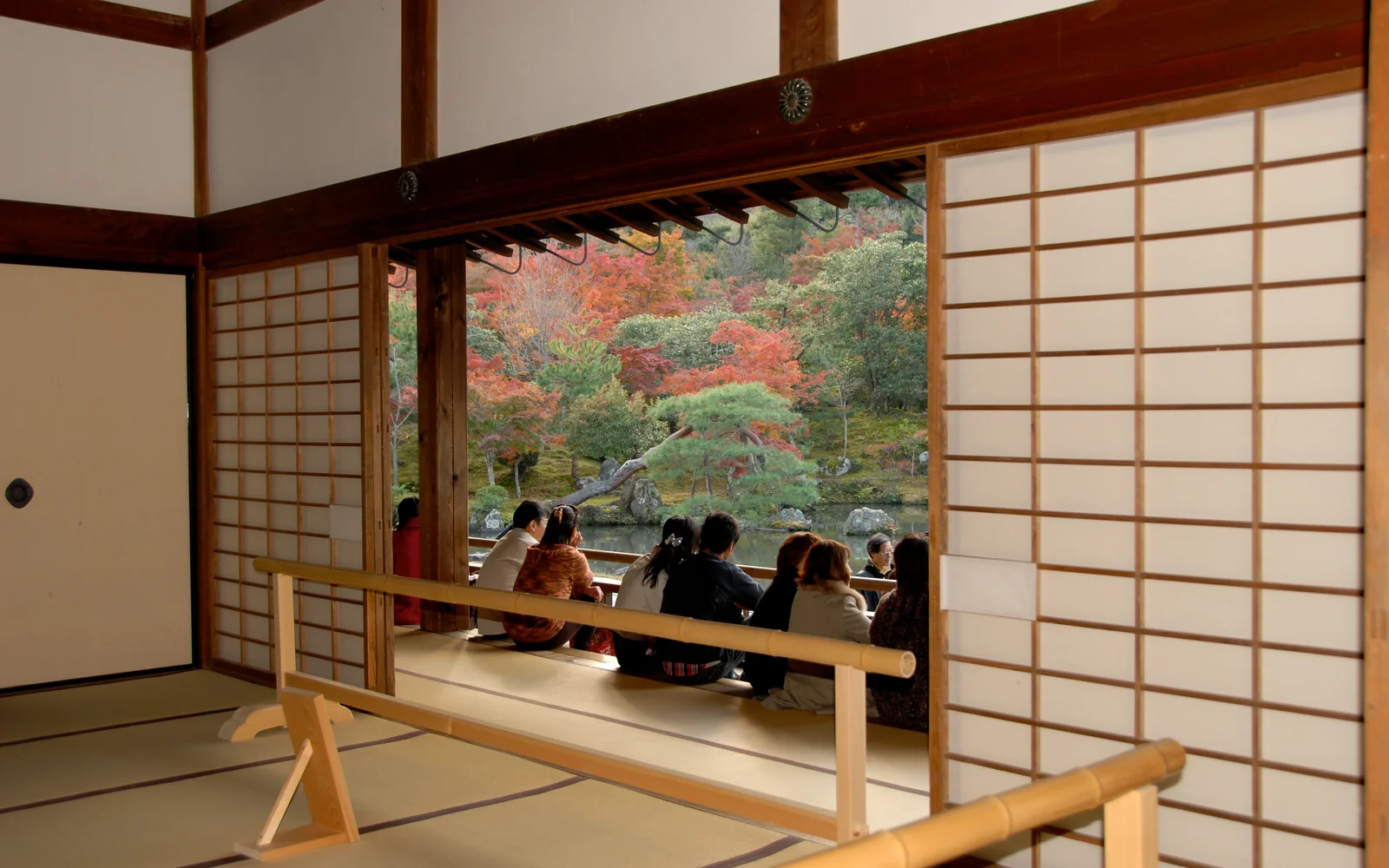
At dawn, Kyoto still possesses an air untouched by the human voice. Mist lingering along the mountain edge draws the temple's white walls a little farther away. When one steps onto rain-darkened flagstones, cold rises through the soles, while wind carrying the scent of cedar slips through the cuffs. At a machiya near the temple gate, the shadows of wooden koushi lattice screens stretch in fine lines across the earthen floor. From the kitchen beyond comes the sound of running water. Soon steam begins to rise, and a lidded lacquer bowl is placed upon the tray. The meal has not yet begun. Yet the work required to bring that bowl here has already unfolded in layer after layer.
What Dogen wrote in Tenzo Kyokun was not a teaching that could be satisfied by turning cooking into a metaphor for the spirit. It was the concrete labor of sorting rice, preparing water, tending fire, and serving food without missing its appointed moment. The tenzo is the steward responsible for food within the community of practice, one who must not be distracted by the rank of ingredients but fulfill the task through the hands and eyes of the self. Kishin is the joy of being able to serve. Roshin is the care of a parent mindful of a child. Daishin is a spaciousness that does not incline toward abundance or want. These are not beautiful words laid beside the tray. They are means of composing the body that stands before the pot.
The umami of kombu reaches the tongue, and behind it the sweetness of turnip emerges quietly. Sesame does not press its fragrance forward, but breathes at length beneath the smoothness of kudzu. Tanmi is neither the erasure of flavor nor a doctrine that thinner is always better. It is the flavor of exacting work, in which the nature of each ingredient is left uncovered and each is arranged so as not to obstruct the others. Among the six tastes of Zen cuisine, tan is counted alongside bitter, sour, sweet, pungent, and salty. Within the bowl is not an empty nothingness, but an assembly of water, soil, season, and human labor. A journey into Kyoto's shojin ryori begins by receiving that assembly, one mouthful at a time.
Following the Lineage of Shojin through Five Kyoto Zen Temples — From the Maturation of Daitokuji Natto to Tenryuji's Gardens and Table
The five temples named here are not the Kyoto Gozan, the historical system of the Five Great Zen Mountains. They are five waymarks chosen for reading the interwoven histories of tea, fermented foods, temple shojin ryori, tofu cuisine at the gates, teachings rooted in daily cooking, and Higashiyama's yuba culture. All belong to the Rinzai tradition, yet their food cultures cannot be gathered under Dogen's words alone. With the Soto Zen text Tenzo Kyokun as a lantern, we look instead at each temple's history and at the differing positions of those who prepare its food. The culinary notes below indicate points of attention rather than guaranteeing any currently fixed course. Menus, dining rooms, opening dates, and reservation procedures should be confirmed before visiting.
Murasakino Daitoku-ji and Daitokuji Ikkyu at the Temple Gate — Deep Salt and the Food of Tea
In the morning at Murasakino, the shadow of the earthen wall brightens before the white gravel does. Daitoku-ji, a Zen temple associated with Ikkyu Sojun, formed deep ties with tea masters including Sen no Rikyu. At its gate, Daitokuji Ikkyu carries forward shojin cuisine, not as the monastic hall itself, but as a restaurant linking the temple's culture with the food of its guests. What deserves particular attention here is the fermenting craft of Daitokuji natto. Unlike the familiar stringy natto, it is a type of temple natto fermented and matured with koji before being dried. Within each small dark-brown morsel are concentrated salt, acidity, and the fragrance of age. The Ikkyuji natto passed down at Shuo-an Ikkyu-ji in Kyotanabe belongs to a related culture, yet its place of transmission is different. Taste without confusing the names, and the contour of the land returns even in a single small grain.
Arashiyama Tenryu-ji Shigetsu — Shojin Ryori beside a Walk through the Sogenchi Garden
When morning cloud settles along the ridge of Arashiyama, the surface of Sogenchi Pond receives a pale impression of the mountain's color. The garden of Tenryu-ji, known as the work of Muso Soseki, binds rocks, water, and the mountain beyond into a single field of vision, then alters their relationship with every step. At Shigetsu within the temple precincts, one may eat shojin ryori while inhabiting this setting. Yet the experience of walking through the garden should be distinguished from the view available from the dining room. Rather than expecting Sogenchi Pond from every seat, carry the season received in the garden back to the table. The green of vegetables beside vermilion lacquer, the warm fragrance released when a lid is lifted, quietly answer the moss and water just seen.
Higashiyama Nanzen-ji with Okutan and Junsei at the Gate — Soybean Sweetness Opening through the Steam
After looking up at Nanzen-ji's Sanmon, the whiteness of yudofu feels especially intimate. The scale of one's gaze shifts, from monumental architecture to a small spoon. Okutan Nanzenji and Nanzenji Junsei are restaurants with distinct histories and preparations, not establishments serving the monastic diet of the temple hall unchanged. Okutan carries a history beginning in the early Edo period, while Junsei preserves the Junsei Shoin, built as a school of rangaku, or Western learning. We should resist calling restaurants of differing origins uniformly four-hundred-year-old shojin cuisine. Water deeply affects the taste of tofu, but the precise source or geological lineage of the water used by each establishment cannot be declared from a place-name alone. First, attend to how the fragrance of the soybean rises within the bowl.
Hanazono Myoshin-ji Torin-in — Meeting Seasonal Vegetables and the Work of Every Day
Torin-in, one of the subtemples of Myoshin-ji, is known for its sala trees. In the garden at the beginning of summer, white flowers fall to the ground, while the green of the moss continues to hold their outline. The work of Reverend Nishikawa Genbo, who has transmitted shojin cuisine here, has drawn shojin away from the realm of rare delicacy and back toward the household kitchen. The skin of a daikon, the stem of its leaves, a small fragment that appears to be leftover — each may open a path to cooking through the cut and the application of heat. Yet using every part is not an unconditional rule. Distinguishing what is spoiled or inedible and preparing it safely is also a form of care for the person who eats. Shojin begins with the patient labor of cleansing a vegetable still marked by soil.
Higashiyama Kodaiji and Hashiba Nearby — The Expansive Foodways of Kyoto Seen through Yuba
Kodaiji was founded by Kita no Mandokoro Nene to pray for the repose of Toyotomi Hideyoshi. After walking the precincts and returning to the slopes of Higashiyama, the temple's stillness gradually mingles with the pulse of the street. Yuba cuisine enjoyed at Hashiba near Kodaiji offers one point of entry into the food culture of this neighborhood. Yet dishes served by restaurants around the temple must not be equated with the monastic shojin cuisine transmitted at Kodaiji itself. Yuba is the thin skin lifted from the surface of warmed soy milk. Depending on the timing of lifting and the way the sheets are layered, it may be tender and silken or possess a distinct resistance to the bite. In a single pale sheet, differences of ingredient and technique become remarkably clear.
The Threefold Law of Buddhist Culinary Art — Five Flavors, Five Colors, Five Methods, and the Small Cosmos of Kyoto's Seasonal Heirloom Vegetables
In Shojin Ryori, vegetables are never mere accompaniments. Each is a small cosmos, receiving earth, water, and sun, and carrying within its flesh the hours of a season. Gomi orders the tongue, Goshiki sends vital energy through the depths of the eye, and Gohō gently opens the latent virtue of each ingredient. The knife is not an instrument of dominion but an ear with which to hear the voice of things. The way of food shown by Dogen Zenji was not a pursuit of heightened intensity, but an art of leaving existence unclouded.
The Five Flavors and the Sixth Sensibility — The Deep Quiet of Tanmi
Dogen's philosophy of harmonizing the Five Flavors — sweetness, acidity, pungency, bitterness, and saltiness — in order to apprehend, beyond them, the clear presence of the ingredient itself, known as Tanmi. Tanmi does not mean an absence of flavor. It is the faint yet certain outline of life remaining after all excess has been pared away — the white breath of a turnip, the earth remembered by an eggplant, the morning dew held in a green leaf. Dashi and seasoning are not used to cover that outline, but to illuminate it with discretion.
Goshiki — Blue, Red, Yellow, White, and Black in the Harmony of Yin and Yang
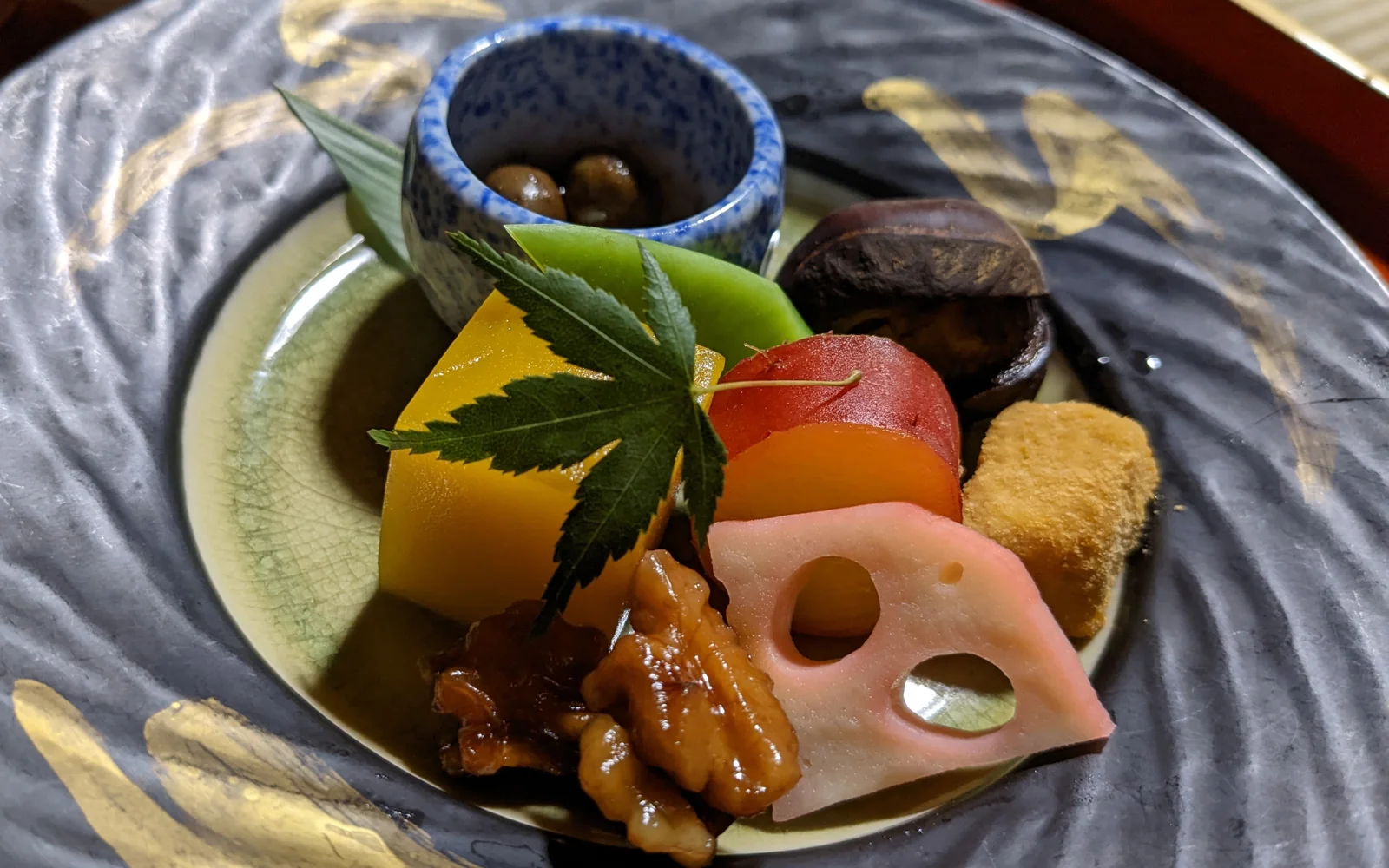
A chromatic necessity that steadies the body's circulation of vital energy through the eye. Blue signifies spring's first shoots and the clarity of the liver, red the summer fire and the heart's rising warmth, yellow the reassurance of earth, white the lucid air of autumn, and black the deep storehouse of winter. To arrange five colors in a bowl is not to decorate a dish with gaiety, but to place the cycle of heaven and earth upon a single tray in miniature. Before flavor arrives, color has already begun to settle the diner's breath.
Gohō — The Full Virtue of the Ingredient Through Five Methods
The Five Methods — serving raw, simmering, grilling, frying, and steaming — set aside excessive artifice and draw forth the vitality held deep within a vegetable's fibers through the mediating forces of heat and water. Raw, it conveys the memory of soil directly. Simmering loosens savor through time. Grilling raises fragrance. Frying seals the inner moisture in a moment of heat. Steaming encloses the ingredient without allowing its vital spirit to escape. Even the same vegetable, subjected to another method, becomes a different poem of the season upon the tongue.

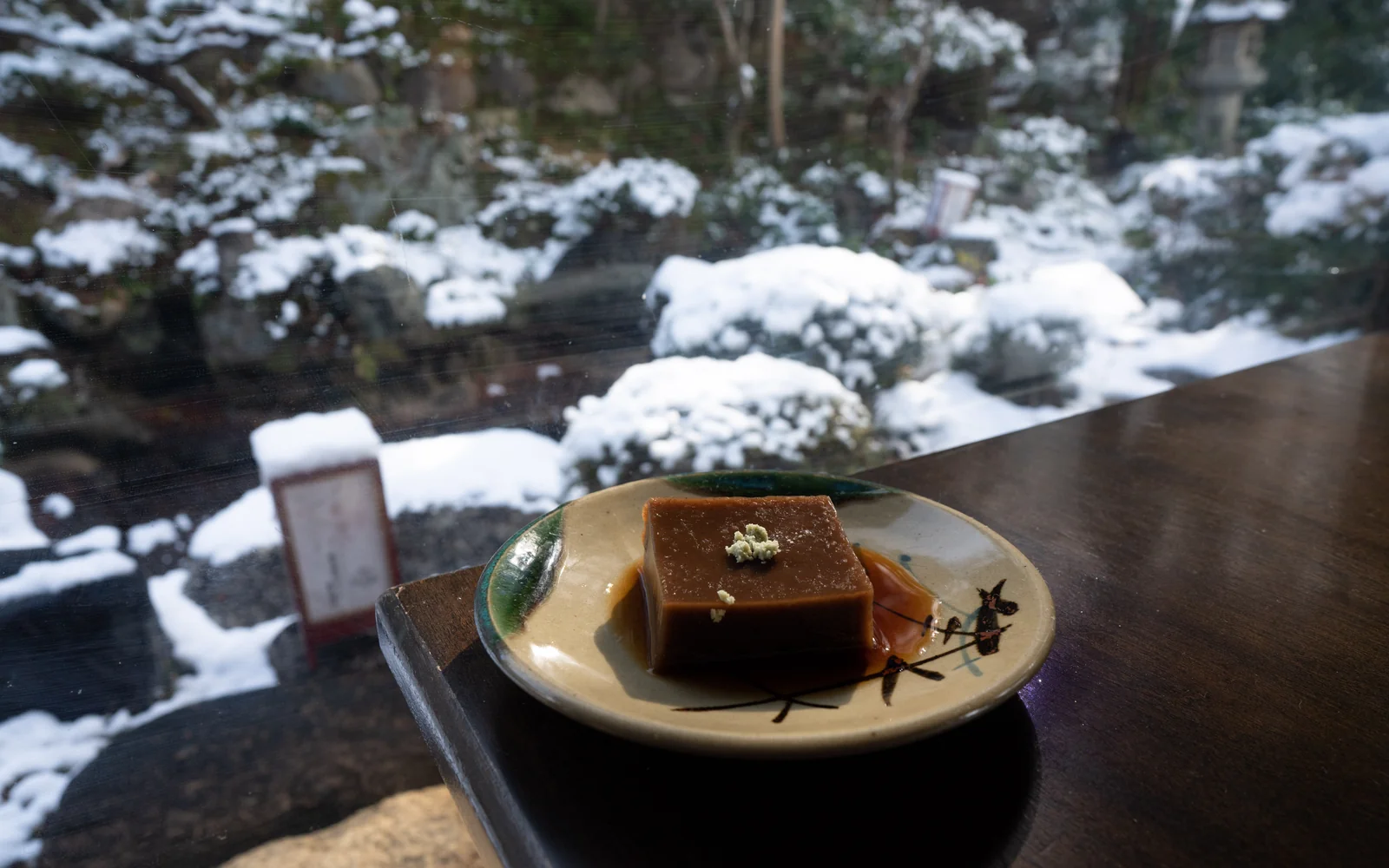
Honzu Canopy Cultivation Shaped by the Mists of the Uji River — Single-Cultivar, Freshly Milled Koicha Opening onto the Abyss of the Spirit
Tea is not merely a drink made by steeping leaves in hot water. In the depth of a single bowl lie the mountain ridgelines, the mist crossing the river surface, the water sinking into the soil, and the memory held in the hands of the tea master. Koicha tasted beside the Uji River is a small universe in which the time of the land has been distilled, summoning within the drinker a silence older than words.
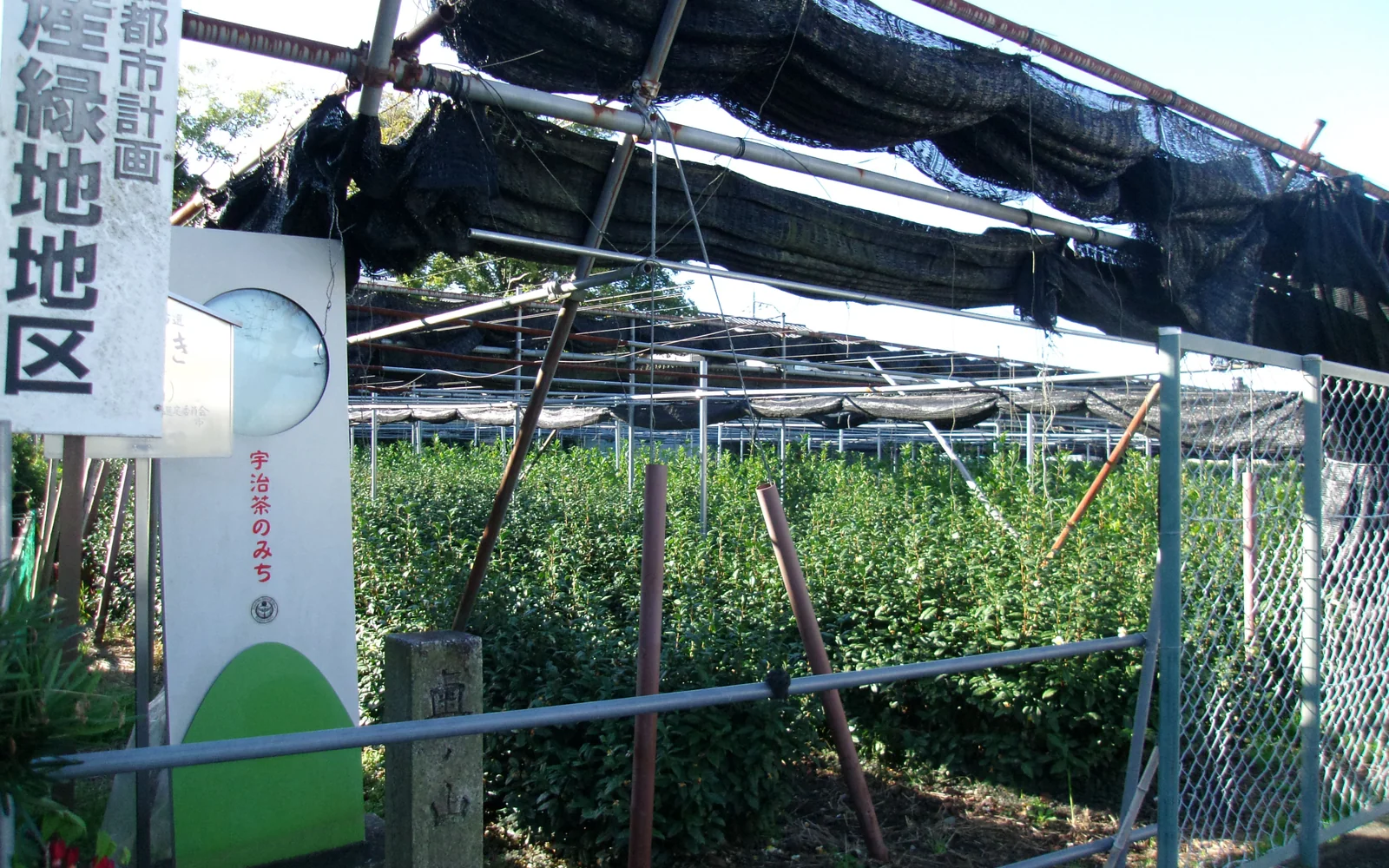
The river mist and humidity carried by the Uji, together with the sharp changes between mountain day and night, give Uji tea its fine-textured dignity. Morning fog wraps the young leaves in softness, while the diurnal temperature range deepens their aromatic strata. In leaves bearing the presence of the waterside, a fleeting fragrance rises from beneath the green brightness, recalling wet stone and tender bamboo.
Thirty days of sunlight exclusion beneath the traditional Honzu straw-thatched canopy, blocking 98 percent of the light, dramatically concentrates theanine and chlorophyll, creating the foundation of covered aroma and dense umami. Leaves raised in restraint soften the angles of bitterness and astringency, accumulating a profound scent of nori and young foliage, together with a sweetness that lingers upon the tongue. Even the light filtering through the straw, the tea master watches as part of the season itself.
The gentle grinding of a granite mill at roughly forty revolutions per minute suppresses frictional heat and preserves both particle uniformity and fragrance. The sound of the mill resembles water that has never learned to hurry. In every vivid green grain of powder dwell the life of the leaf veins and the patience of the tea master. The instant it meets hot water, matcha changes from a beverage into a vessel for the spirit.
A lucid, piercing green and a noble natural sweetness entirely free of astringency. It opens across the palate like a quiet flower, its finish fine and enduring, leaving behind an upright sense of distinction.
A brilliant deep-green radiance and a fresh covered aroma that rises the instant it touches the mouth. Young grass and blue-green nori overlap in the fragrance, preserving a crystalline outline even in koicha.
A celebrated cultivar whose characteristic covered nori fragrance is exceptionally rich, leaving a weighty, resonant finish. Beneath its deep umami lies the faintest woody note, a complexity that reveals itself most clearly in a quiet tatami room.
Six Kyoto Sanctuaries — Celebrated Temples and Houses Resting Amid Silent Gardens and a Thousand Years of Timber Lattice
A journey in search of Kyoto Shojin Ryori must never be undertaken for the food alone. One passes through a gate, treads a stone path, and places oneself within the light filtered through shoji. That entire succession of moments becomes one course upon the tray. Within temple precincts and the inner rooms of Machiya, the waters of the land, seasonal vegetables, and generations of handwork breathe quietly, almost sotto voce.
Tenryu-ji Shigetsu
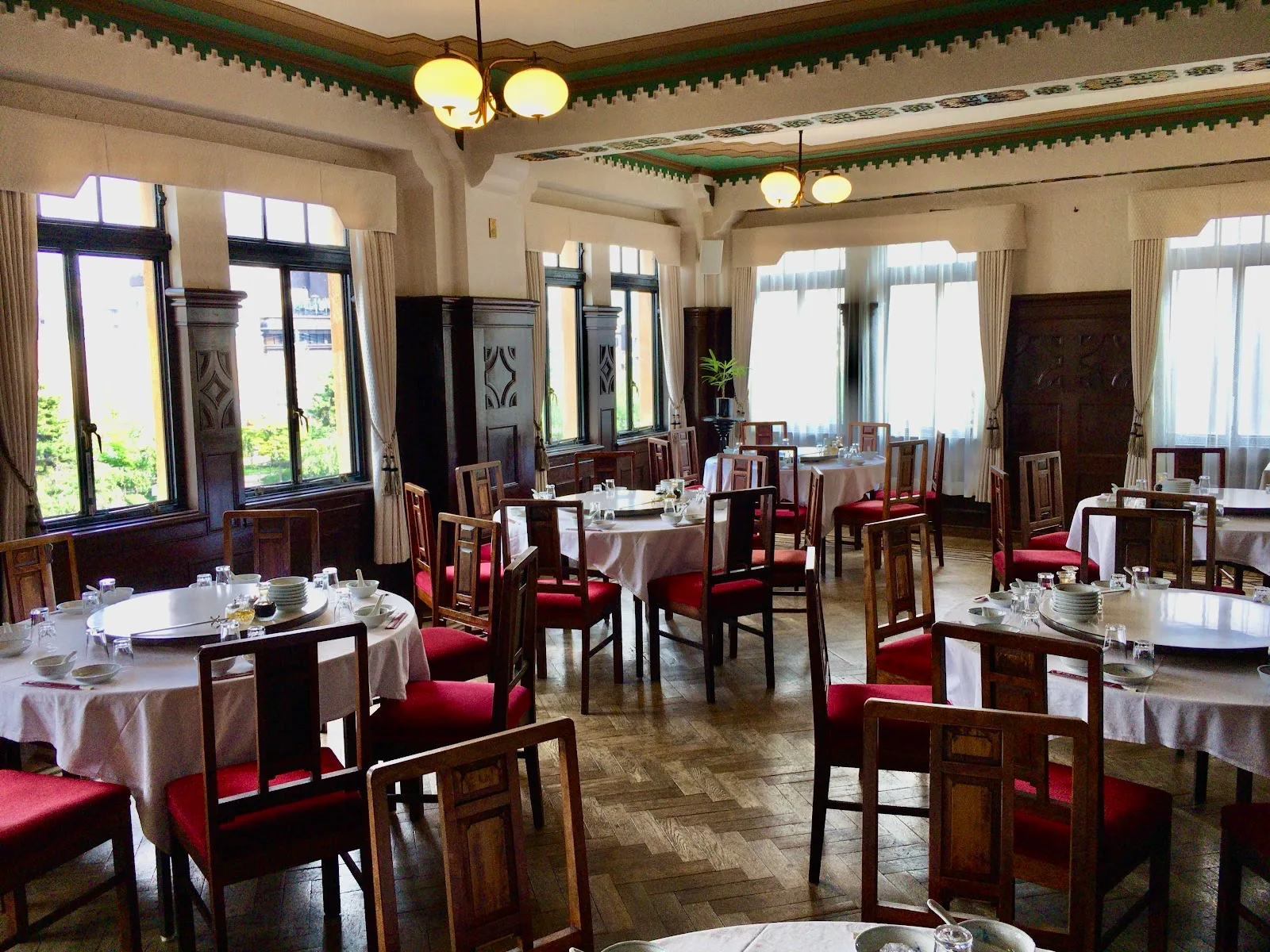
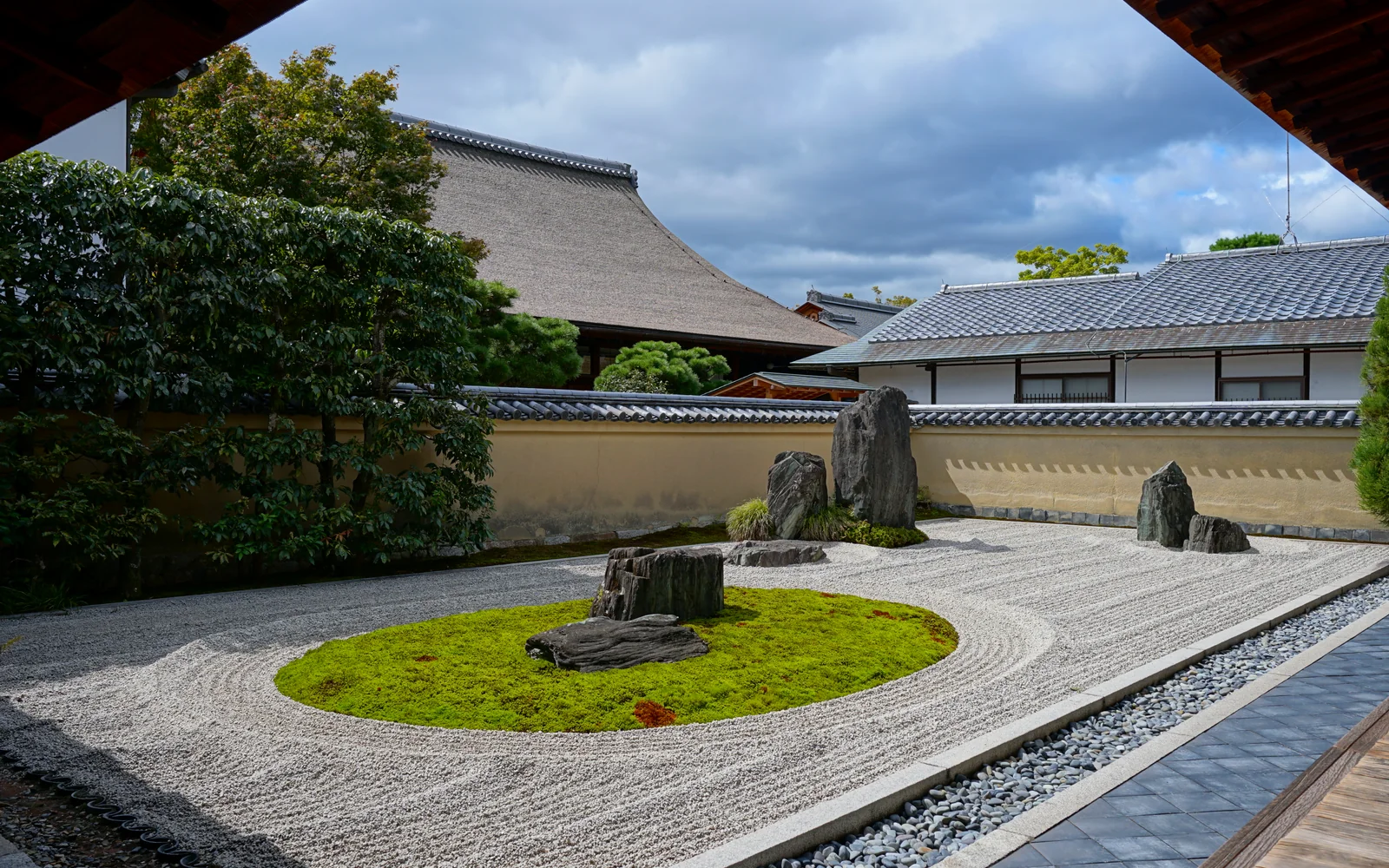
With the mountain air of Arashiyama and the stillness of the Sogenchi Garden behind it, Shigetsu serves Tenzo cuisine centered on seasonal vegetables. The arrangement of the vessels possesses the composure of a Zen temple, while the delicate flavors reveal a cook devoted to drawing out the true character of each ingredient without relying on dashi. As one advances the chopsticks while gazing into the garden, the meal shifts from an act of observation to a dialogue with nature.
Daitokuji Ikkyu
A venerable Shojin Ryori house that has marked the years at the gate of Daitoku-ji. Seasonal wanmono and simmered dishes possess a deep savor beneath their refusal of ornament, joining the spirit of the tea ceremony with that of Zen upon a single tray. In a quiet private room, the honzen meal makes eating feel like a restrained form of practice.
Nanzenji Junsei
A house emblematic of Kyoto yudofu culture, blessed by the watercourse of Nanzen-ji and its garden views. Warmed tofu, though delicately flavored, speaks eloquently of the quality of the water and the sweetness of the soybean. Taken with fresh Yuba and seasonal Shojin Ryori, it reveals the depth of white savor cultivated by Kyoto groundwater.
Izusen Daitokuji
Set within Daiji-in, Izusen serves Shojin Ryori in vessels suggestive of the iron bowls carried by itinerant monks. As each lid is lifted, Goma-dofu, simmered vegetables, fried preparations, and other quiet presences emerge. At the end, the bowls return to their nested form, reclaiming their original emptiness. In that gesture lies the functional beauty of Zen.
Nakamura Tokichi Uji Main Store
The historic main store of a tea merchant near Uji Station. Within a Machiya space retaining the memory of tea manufacture, one encounters the culture of matcha fragrance and confectionery. The cool, tremulous texture of nama cha jelly is irresistible, yet in the unhurried tasting of freshly milled matcha, the light of Uji and the river breeze seem to be sealed inside the bowl.
Gion Karyo
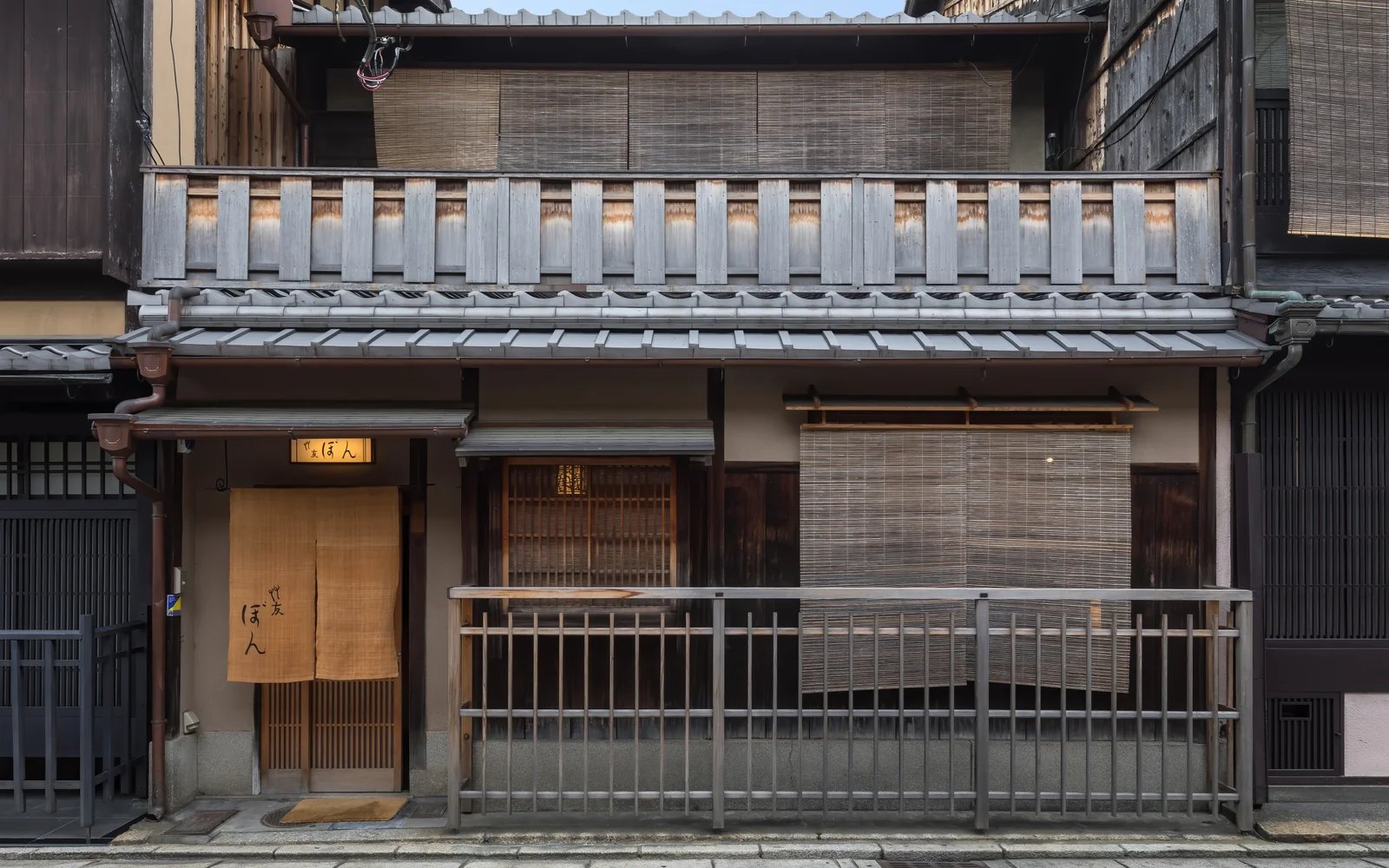
Beyond the koushi lattice screens unfolds the characteristic depth and shadow of a Kyoto Machiya. Seasonal Kyo-yasai are shaped with the poised technique of Kyoto kappo, while rice cooked in an earthenware pot receives the fragrant savor of the kamado hearth. In the unhurried time of the Machiya, each dish appears as though gently untying the memory of the land.
A Guide to Shojin Ryori and Zen Temple Etiquette — The Accomplished Guest's Essential Knowledge
Etiquette is not a set of rules designed to bind the body. It is an attitude of mind that lowers the sound of a vessel being placed, considers the presence of the neighboring diner, and remembers that even a single grain of rice gathers within it many lives and much labor. When approaching a Zen temple meal, humility and a quiet willingness to learn are more precious than perfect knowledge.
Learning from Dogen Zenji's Tenzo Kyokun, take to heart the Zen philosophy of honoring ingredients while receiving life itself. The depth of Tanmi does not lie in intensifying flavor, but in drawing forth the native presence of an ingredient without clouding it.
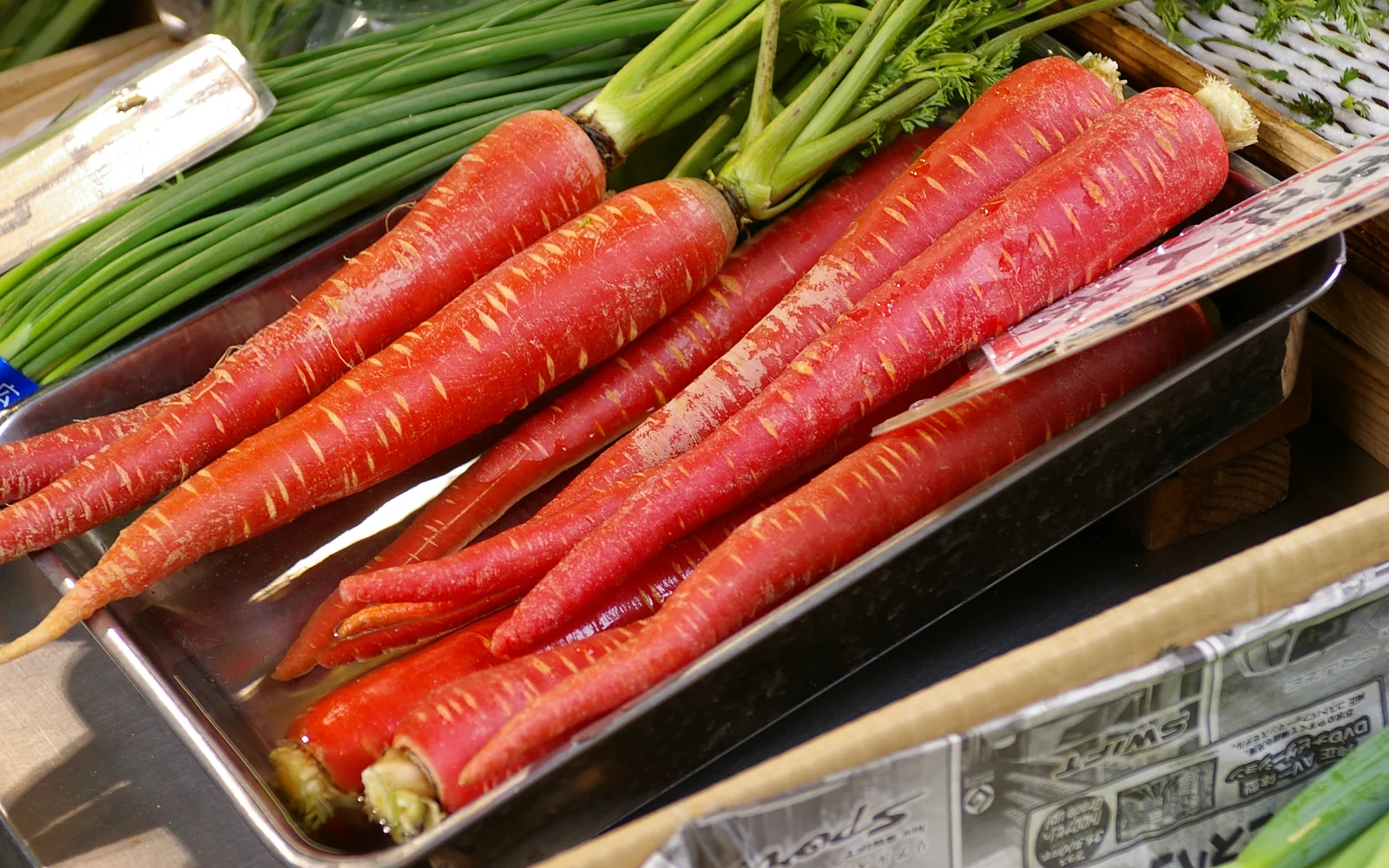
Savor the vigorous life of Kamo eggplant and Shogoin turnip alongside the silken refinement of Yuba and Goma-dofu, brought to their utmost expression by the artisan's labor. Plant-based ingredients are not austere by nature. Through time and painstaking work, they acquire an abundance of forms and voices.
Place yourself within the shadowed depth of the Machiya and the dry landscape of the Zen temple, then let a cup of Uji tea rinse away the mind's sediment, bringing a once-in-a-lifetime journey to its close. What remains after the meal is not fullness alone, but the quiet realization that one's pace has softened and one's own breathing has returned.